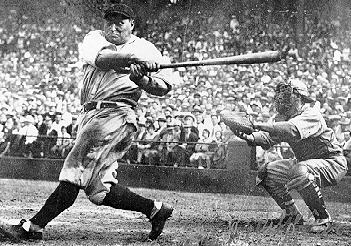
Well Pete Rose didn't take steroids so thats a whole different section but yes you are correct in a way. If you take steroids then you shouldnt go into the hall of fame.
__________________
Fantasy
-2009 Forum Bracket Challenge Winner -2009 Wheelhouse Radio Fantasy Baseball Winner -2009 Wheelhouse Radio Fantasy Football Runner Up
70. Jake Beckley Pos: 1B Teams: Pittsburgh Alleghenys/Pirates 1888-1889, 1891-1896 Pittsburgh Burghers 1890 New York Giants 1896-1897 Cincinnati Reds 1897-1903 St. Louis Cardinals 1904-1907
Biography:
One of the most consistent hitters from the turn of the century, "Eagle Eye" Jake Beckley makes the list at number 70.
Born August 7, 1867 in Hannibal, Missouri, Beckley would sign on with the Pittsburgh Alleghenys in 1888, and would quickly establish himself as a premiere player leading the Alleghenys in nearly all major offensive categories in both of his first two years in Pittsburgh.
Before the 1890 season, Beckley would jump from the Alleghenys to Montgomery Ward's Players League, but wouldn't leave Pittsburgh, signing on with the Pittsburgh Burghers.
After the Players League was crushed by the National League after their one year in operation, Beckley would return to the Alleghenys and would once again establish himself as the team's best player, and was often times the only good on the team, as the Alleghenys/Pirates would only finish above 5th place once during Buckley's tenure.
Like many other players from his era there isn't much known about Beckley other then his stats, so this biography will be short, however a good equivalent player for Jake Beckley would be Sean Casey.
A very high average hitter, who unlike Casey had speed, and decent power.
Beckley never really put up monster numbers during his career, but he was consistent for the better part of 20 years, and upon his retirement he had 2930 hits, which was second only behind Cap Anson on the all-time list at the time.
In 1971 Beckley would be elected to the Hall of Fame by the Veterans Committee.
69. Billy Williams Pos: LF/RF/OF Teams: Chicago Cubs 1959-1974 Oakland Athletics 1975-1976
Biography:
One of the games most intimating hitters during the 1960's and into the 1970's, Billy Williams makes this list at number 69.
Born June 15, 1938 in Whistler, Alabama, Williams would sign on with the team who he would spend nearly his entire career with, the Chicago Cubs in 1956 out of High School, becoming one of the first African American players in history to play Major League Baseball without any experience in the Negro Leagues.
Unlike many players in the south, Williams actually didn't experience much racial tension as a child, as the Mobile superb he lived in was integrated, and it wasn't until he got to the minor leagues where he began to experience discrimination.
Williams actually quit the team at one point, and had to be talked back into joining the team by Cubs scout Buck O'Neil.
Williams would play sparingly in both 1959, and 1960 before his first full big league season in 1961.
Williams would play very well his first year, batting .278 with 25 home runs, and driving in 86 runs as the Cubs starting left fielder.
His efforts would be good enough to beat out Joe Torre for the 1961 Rookie of the Year award.
An incredibly durable player, Williams played in at least 150 games every year from 1962-1973, and played in at least 160 games 8 times, and even led the NL in games played 5 times.
Williams steadily improved following his Rookie of the Year campaign and was a standout outfielder in the National League in an league that was loaded with all-time great outfielders, making the all-star team six times.
Few could also combine his batting ability with his sheer power, as he never hit below .275 from 1961 until the end of his Cubs tenure, and only hit below 20 home runs in his final year in Chicago.
Williams would spend the majority of his career as a left fielder, but would spend two years in right field in 1965 and 66 as the Cubs reacquired George Altman who was even a worse fielder then Williams was.
Despite Williams' short comings as a fielder he was responsible for two crucial catches that saved two Cubs no-hitters, as Ken Holtzman, and Milt Pappas hold Williams a thank you for his efforts in each of their games.
Williams would have his best year in 1972 at the age of 34, leading the National in both hitting with a .333 average, and slugging, and OPS, aided by 37 home runs.
His efforts were only good enough for a second place finish in the MVP voting for the second time in his career, as Williams remains one of the greatest players to have never won an MVP award.
At the end of the 1974 season, the Cubs would trade their long time star, and now Chicago legend to the Oakland A's for prospects, as the Cubs were looking to rebuild, while the A's were looking to win now.
As a DH Williams would belt 23 home runs, and help the A's to their 4th consecutive west division title, as the A's looked to win their 4th straight World Series.
Unfortunately the A's would be stopped by the Boston Red Sox in a three game sweep, with Williams going 0 for 7 in his only postseason appearance.
In 1987 Williams was elected to the Hall of Fame, and that same year the Cubs elected to retire Williams' number 26, even though the number had been previously reassigned several times since Williams playing career ended.
To this day Williams still remains involved with the Cubs, and occasionally makes public appearances for the team.
68. Max Carey Pos: OF Teams: Pittsburgh Pirates 1910-1926 Brooklyn Robins 1926-1929
Biography:
One of the greatest base stealers of all-time, longtime Pirate center fielder Max Carey makes the list at number 68.
Born Maximilian George Carnarius in Terre Haute, Indiana on January 11, 1890, he would adopt the name Max Carey in order to play in a professional game, while still keeping his amateur status. A very common occurrence in those days. However the name would stick for the remainder of his career.
In 1910, Carey would be signed out of college by the Pittsburgh Pirates, and had his first big league season the following year.
His first year would produce struggles at the plate, but he made up for it in the field, and on the basepaths.
While never a great fundanmental outfielder, few if any players in his day had the type of range that Max Carey had in the outfield. Imagine Garry Maddox, but with not quite as a good of a glove. That's the type of an outfielder Max Carey was.
Although the Pirates were a very competitive team throughout Carey's tenure for the most part, Pittsburgh often times could not get past John McGraw's New York Giants, and while the Pirates finished 3rd or better 6 times from 1911 through 1924, they could not win a pennant.
In 1925, that would finally change, as the Pirates were finally able to finish above the Giants, to win the National League pennant, and face the defending World Champion Washington Senators, in what would go down as one of the greatest World Series ever.
After four games, the Senators held a three games to one lead in the Series, as the Pirates hopes looked pleak. No team to that point had ever come back from being down three games to one to take a series, but that's precisely what the Pirates would have to do, to win the 1925 World Series.
The Pirates would come roaring back in the Series, winning game 5 on the road in Washington, and winning a close 3-2 game at home in game 6 to set up a dramatic game 7, where Washington great Walter Johnson awaited them.
Although nearing the end of his career, Johnson was still arguably the game's most dominant starter, and his ERA for the series entering the game was a minuscule .50, having only allowed one run in two complete game wins during the Series.
Carey would also lead the team in stolen bases that year with 27. This would be a feat Carey would accomplish every year as a Pirate with the exception of one, 1919, when injuries forced him to miss over half the year.
Still no other Pittsburgh Pirate is within 100 steals on the all-time list for team steals, and only Ty Cobb managed to steal home more often then Carey's 33 successful steals.
The following year would be Carey's breakout season. He hit .302 with 5 home runs, while driving in 66 runs, and stole 45 bases.
In 1913, Carey would steal 61 bases. Good enough to lead the National Leauge. A feat he would accomplish an incredible 10 times in his big league career, including a stretch from 1915-1925 where he would lead the NL in steals 9 times out of 11 seasons, including a four year streak from 1922 through 1925.
When the Senators jumped out to a 4-0 lead in the first inning, the game looked over already. Yet the 37 year old Johnson would finally begin to show his age. The Pirates would score 3 runs in the third inning, including one being driven in on a single by Max Carey, to cut the lead to 4-3.
The Senators would pile on 2 more runs in the top of the fourth to go up 6-3, and once again appear to put the game out of reach with Walter Johnson on the mound.
The Pirates would tack on a another run in the fifth, before exploding for 2 runs in the seventh, to tie the game at 6 a piece.
It was clear to many by now that this was not the same Walter Johnson who had pitched the previous two games, and many in the stands including AL President Ban Johnson thought that Johnson should be taken out of the game.
The Senators would go up 7-6 in the top of the eighth, and to the surprise of many Senator player/manager Bucky Harris would elect to leave Johnson in the game.
Harris' faith would not be rewarded, as the Pirates would put 3 more runs on the great pitcher, to go up 9-7 entering the ninth inning which would prove to be the final score, as the Pirates had their first World Championship since 1909.
Although heavily criticized by many, Harris' said after the game that he would have approached it no differently.
Harris would go on to have a Hall of Fame career as a manager, and is currently 6th on the all-times wins list for managers. He is also the answer to a trivia question, as he was the man the Yankees fired after the 1948 season to allow Casey Stengal to manage the club.
As for Carey, he would be one of the heroes for the Pirates, hitting an incredible .458 for the series while stealing 3 bases, and probably would have been named the World Series MVP, had the award been given out.
In the middle of the 1926 season, the Pirates would unceremoniously dump their longtime great outfielder, as he was claimed off waivers by the Brooklyn Robins, where he would have three otherwise forgettable seasons before retiring after the 1929 season.
After retiring he would briefly manage the Dodgers for two seasons from 1932 through 1933, and was inducted in the Hall of Fame in 1961 by the Veteran's Committee.
Pete Rose is an amazing player and shoudn't be banned because he gambled, he didn't use steroids or cork his bat, Sosa did both of these and A-rod used steroids, Pete Rose is getting rooked.
__________________
I think that Jimmy Hendrix was the best guitarist in the world
Cap Anson Pos: 1B Teams: Rockford Forest Citys 1871 Philadelphia Athletics 1872-1875 Chicago White Stockings/Colts 1876-1897
Short Biography:
Because of lack of information from the time period, players like Cap Anson were disqualified from the rankings.
But perhaps no other turn of the century player changed the game more then Cap Anson. As a player he was perhaps the greatest to ever play the game before 1900, and his name is still plastered on the Chicago Cubs record books, as their all-time leader in RBI's, hits, doubles, and putouts. He is also quite possibly the first player ever to get 3,000 hits depending on how you score it, as the feat has been taken away from him, and then given back on numerous occasions by statisticians.
As a pioneer Anson helped develop the concept of spring training.
Unfortunately Cap was also one of the game's biggest racists, refusing to play any opponent of darker skin, and is credited by many for help setting the prescience for racial intolerance in baseball.
Behind only Sandy Koufax as the greatest Jewish American player to ever play the game, Greenberg's war time service as well as his missing nearly the entire 1936 season due to injuries, only puts him at 10 full time seasons of big league service which is just simply not enough to make the list.
Greenberg was also a two time MVP, and had he had his war time years back, it would have given him four more big league season to accumulate stats, and given his talent that would have easily been enough for him to make the list.
Like many others from his time, Greenberg was treated unfairly due to his wartime service, and as you have already begun to see there is a tremendous lack of players from the late 30's, and 1940's, which will only become more apparent, as there will be 13 more players named before we get to the next player that spent the majority of his career playing in the 1940's, and 15 more players will be named before the next one is reached.
Hack Wilson Pos: OF Teams: New York Giants 1923-1925 Chicago Cubs 1926-1931 Brooklyn Dodgers 1932-1934 Philadelphia Phillies 1934
Short Biography:
If this list was done by greatest players at their peak, Hack would have probably cracked the top 30.
One of the most dominating hitters of his era, Hack Wilson still owns the record for the most RBI's in a single season with 191.
Unfortunately for Hack, the only thing he did better then hit was drink.
The battle between his talent and his love of alcohol would ultimately be won out by his addiction to booze, and it no doubt had an impact on his early death at age 48.
There is no telling what Hack could have done had he not had the types of problems he had.
Hack Wilson was voted into the Hall of Fame in 1979 by the Veteran's Committee, but given his very short career, and considering some the players who are not in the Hall of Fame, I regard him as a very questionable selection.
Hal Chase Pos: 1B Teams: New York Highlanders/Yankees 1905-1913 Chicago White Sox 1913-1914 Buffalo Befeds 1914-1915 Cincinnati Reds 1916-1918 New York Giants 1919
Biography:
Before the days of Pete Rose, and the Black Sox, Hal Chase was the face of betting in baseball.
An outstanding defensive first baseman, and a fine hitter, Chase's stats cannot properly be gauged because it's not known how many games he threw.
Although his numbers under normal circumstances are worth looking into by the Veterans Committee, Chase is seen universally as one of the most disgraceful players to ever play the game, and it is highly unlikely that he will ever be known as more then a footnote in history.
"Shoeless" Joe Jackson Pos: OF Teams: Philadelphia Athletics 1908-1909 Cleveland Indians 1910-1915 Chicago White Sox 1915-1920
Short Biography:
He's become known as the face of the Black Sox scandal. Jackson was second only to Ty Cobb for the best hitter in the American League at his peak, as shown by his lifetime .356 average.
Jackson though is best remembered for his involvement in baseball's biggest scandal, the 1919 World Series.
Whether or not Jackson actually threw the 1919 World Series is a debate that rages to this day.
There is no question that Jackson took the money from the gamblers, but his .375 batting average in the series suggestions otherwise. However his poor defensive play also suggests that he may have in fact been in on the fix.
It's widely known that Jackson who couldn't read or write was not a very intelligent man, and may have a had a tough time wrapping his mind around exactly what he was paid to do entailed, and probably did not have the mental capacity to even understand why the Sox were throwing the World Series in the first place, which was done more to extract revenge on Owner Charles Comiskey then for money.
The reason Jackson was not on the list had nothing to do with his role in the scandal, but for his lack of seasons played.
The reason for my disparity in his rankings was because I had found I had not counted his 1915 season, a year which he had played for two teams (I made the same error with Max Carey), but later found I had also counted his 1911 season (his best year) twice.
Recently Bud Selig has opened up an investigation into the possibility of reinstating "Shoeless Joe" by so far nothing has come out of it.
If your interested in learning more about the Black Sox scandal, I highly recommend the John Sayles film Eight Men Out.
I will say the film does require knowledge of the scandal in order to even understand the film, but it very well done in my opinion, and is one of the most historically accurate sports film I've ever seen.
-- Edited by pmoehrin on Saturday 27th of June 2009 02:19:15 PM
Pos: CF/OF Teams: Philadelphia Phillies 1948-1959 Chicago Cubs 1960-1961 New York Mets 1962
Biography:
One of the famed "Whiz Kids" Richie Ashburn makes the list at number 67.
Born in Tilden, Nebraska on March 19, 1927, Ashburn was signed out of High School by the team he would spend nearly his entire career with the Philadelphia Phillies in 1945.
Ashburn would arrive on the scene in 1948, and would have an immediate impact on the Phillies leading the team with a .333 batting average, as well as the National League in stolen bases with 32.
In 1950 the Phillies who had long been established as the National League's worst was beginning to look like they may actually win the 1950 NL Pennant.
To say the Phillies were the LA Clippers of sports during the first half of the 20th century would be an insult to the Clippers.
The Phillies had only once won the NL pennant in 1915, and had only one winning season between 1918 and 1948, and had a 13 year stretch from 1933 to 1945 where they finished either last or next to last in the NL standings.
The fault of the Phillies woes was terrible ownership. William Baker who had owned the club from 1913 to 1930 was shrewd even by standards in those days.
He refused to pay for scouts (the Phillies only had one), opted to sell players to other teams once they demanded salary increases, most famously Grover Cleveland Alexander, and in perhaps the most symbolic sign of his shrewdness, refused to even pay for groundskeepers, opting instead to have sheep graze in the Phillies tiny Baker Bowl.
Upon Baker's death in 1930, Gerald Nugent became owner of the Phillies, and while good hearted and well meaning, simply had no business owning a team, as his job of leather and shoes merchant could not allow him to keep the teams up to major league standards.
The worst of the Phillie owners was yet to come.
In 1943 the team was sold to William B. Cox. Cox had played baseball at Yale, and almost regarded himself as one of the players, often interfering in their day to day activities, and even firing their manager when he complained about it.
Still Cox had money unlike Nugent, and the Phillies would improve under him. Unfortunately the manager he fired Bucky Harris (read Max Carey's article for more info) came forward claiming he had evidence that Cox was betting on his own team.
Commissioner Kennesaw Mountain Landis announced a full scale investigation at season's end which found Cox guilty.
Because of his actions Cox became the first non-player under the tenure of Kennesaw Mountain Landis to be banned for life.
Cox was forced to sell interest to Robert RM Carptenter who in turn gave controlling interest to his son Bob Jr. who's first action was to change the name from the Phillies to the Blue Jays. Unfortunately the name would only last two years, as nearby Johns Hopkins University protested the decision under the claim that the Phillies awful team history brought shame upon their University by adopting the same nickname, and the name was quickly dropped.
While this particular area would fail, the sale of the team to the Carptener's would finally give the Phillies a stable owner who had money, and wanted to win.
(sorry for the long tangent)
With an average team age of only 26, they were dubbed the "Whiz Kids" partially after the 10 Army Air Forces veterans who all went on to become executives at Ford in 1946.
The "Whiz Kids" would win the 1950 NL Pennant on the last day of the regular season, beating the Dodgers on a dramatic 9th inning home run by Dick Sisler.
Ashburn would also play a very valuable role in the game throwing out runner Cal Abrams to preserve the 1-1 tie.
The play is emblematic of Ashburn's defensive play.
In addition to being a prototype leadoff hitter throughout his career, Ashburn was also a great defensive outfielder, and would probably have several gold gloves to his credit if the award had been given out before 1957.
His only World Series appearance would also be a forgettable one as Ashburn only hit .176, as the Phillies were swept away by the more powerful, and more experienced New York Yankees.
Although already an established player, Ashburn would have a breakout year in 1951, finishing second in the NL in hitting with a .344 average, which was good enough to put him 7th in the MVP voting.
Although never much of a power hitter (just 29 home runs in over 8000 at bats) Ashburn would more then make up for it at the plate with his slap hitting, and keen eye.
4 times during his career he led the National League in walks and on base percentage, and twice in 1955, and in 1958 Ashburn would lead the NL in hitting with a .338 and .350 average respectively.
After a short stop in Chicago, Ashburn would be pick up by the New York Mets in the 1962 expansion draft.
The 1962 Mets were made up almost exclusively of cast-offs, low level prospects, and aging veterans, with none of whom had any business playing major league baseball.
Ashburn seemed to be the only one on the team with any measureable talent, being the teams only representative to the All-Star team, and easily led the team with a .306 batting average, as the team only hit .240 for the year.
The Mets wanting to reward their All-Star would name him the MVP at the end of the season.
Approiately the Mets would give Ashburn a boat. A very approriate gift considering Ashburn was a farm boy from Nebraska.
Fittingly the first time Ashburn took the boat out, it sank.
Whether it be from getting a boat that's now in Davy Jones' locker, playing on a team that was clearly going nowhere with a manger that was quite literally asleep at the wheel half the time, or simply just being tired of constantly colliding with shortstop Elio Chacon who didn't understand english, Ashburn had enough of the Mets, and elected to retire at the end of the 1962 season rather then return to what could only be described as the baseball hell hole that was the Mets at the time.
Upon retiring from the Mets, Ashburn would enjoy a very succesful second career as a broadcaster, signing on with the Phillies to do radio and TV in 1963.
In 1971 Harry Kalas would join the team, and the two would make up one of the best broadcast duos in the game.
In 1995 after a long wait, Ashburn finally took his rightful place in Cooperstown, along with fellow classmate and Phillie great Mike Schmidt.
Two years later after just after announcing a Phillies Mets game at Shea Stadium, Ashburn suffered a heart attack, and died at the age of 70.
Ashburn's impact on Philadelphia baseball can still be seen at Citizens Bank Park today, as his number one which was retired by the Phillies can be seen beyond the center field wall, and the area directly behind the center field fence has been dubbed Ashburn's Alley.
-- Edited by pmoehrin on Friday 19th of June 2009 08:55:05 AM
66. Andre Dawson Pos: RF/CF/OF Teams: Montreal Expos 1976-1986 Chicago Cubs 1987-1992 Boston Red Sox 1993-1994 Florida Marlins 1995-1996
Biography:
The second highest player on the list who's eligible for induction who is currently not in the Hall of Fame, "The Hawk" Andre Dawson comes in at number 66.
Born July 10, 1954 in Miami, Florida, Andre was drafted out of high school by the team he would spend most of his career with, the Montreal Expos in the 11th round of the 1975 amateur draft.
After a September call up in '76, Dawson would make the team full time in 1977, joining a very young and talented Expo squad that had Gary Carter, Ellis Valentine, and Warren Cromartie among others.
In fact the Expos only had three regular starters during the 1977 season that were over 23, and all signs pointed towards future greatness as the young team won a respectable 75 games that year.
For his part, Dawson would hit .282, and nearly missed out on a 20-20 season with 19 home runs, and 21 stolen bases.
This along with his gold glove caliber defense, made him an easy choice for Rookie of the Year.
Dawson would improve steadily over the next two seasons, until having his breakout season in 1980.
That year Andre would hit over .300 for the first time in his career, hit 17 home runs, and stole 34 bases.
The biggest improvement for Dawson would be his eye, as he reduced the number of strikeouts he had from 115 the year before, all the way down to 69, and increased the number of walks he had from 27 to 44.
His on field efforts wouldn't go unnoticed, as Andre would win his first of what would be eight gold gloves that year, his first of 4 silver slugger awards, and finished 7th in the MVP voting.
Unfortunately for the Expos it would not be enough, as the team suffered a heartbreaking end for the second consecutive season, finishing just one game back of the Phillies for the NL East title, as Mike Schmidt and the Phillies assumed the role that Willie Stargell and the Pirates had assumed the year before.
The following year Dawson would have what is in my opinion his best year.
Despite the strike shortened season which limited Dawson to only 103 games, Andre still managed to hit 24 home runs, and hit over .300 for the second consecutive season, which led to his first all-star appearance, and a runner up finish in the MVP voting.
In response to the mid-season strike, Major League Baseball elected to divide the season into two halves with the winner of each half facing off against each other in a divisional playoff with the winners going on to the LCS, and eventually the World Series.
The move was a disaster. Teams like the Phillies and Dodgers who had already punched a ticket to postseason, played at only have speed for the second half, and only finished at around .500.
The Cincinnati Reds had the best record in baseball, but because they didn't win their division in either half of the season, missed out on the playoffs, becoming the first team to do so.
The move would work in favor of the Montreal Expos however. With their best competition in the Phillies now eliminated for the time being, the Expos would be submerged in a dog fight with the St. Louis Cardinals for the second half title.
This time the Expos would emerge victorious, and would face the Phillies in a best of 5 divisional playoff.
The series would go the distance, with the Expos winning the deciding game on the strength of a complete game shutout performance by their ace Steve Rogers, and would go on to face the Dodgers in the league championship series.
Once again the series would go the full five games, with the Dodgers winning it in the ninth inning on a dramatic 9th inning home run by Rick Monday to give them a 2-1 lead.
For his part Andre did very little in the series, only hitting .150, with just 2 runs scored.
The Expos would continue to be competitive throughout the 1980's, but the Expos seemed always one bat short of breaking through and making it to the top of the standings.
1982 would represent the high water mark for the Expos, as Montreal would host their first and only all-star game. The Expos would have four starters in the all-star game, as Andre Dawson, Tim Raines, and Gary Carter were all in the starting lineup, while Steve Rogers took the mound.
In 1984 Dawson would make the move from centerfield to right field, in order to make room for speedy young Tim Raines.
The move would have no effect on Dawson's defense ability, as he would win four more gold gloves as a right fielder.
With the Expos clearly in a rebuilding mode, Dawson would be allowed to walk, and signed on with the Chicago Cubs.
Although no longer possessing the speed he once had, as years of playing on the hard turf at Olympic Stadium were now beginning to take their effect, Dawson still had tremendous power, and hit a career high 49 home runs, while also driving in a career high 137 runs.
Those numbers would be good enough to win him the 1987 NL MVP award for the first and only time. (personally I felt the award should have gone to Tony Gwynn, but given the lack of exposure he had in Montreal, I have little issue with it saying that Andre was the best player in the National League for the 1987 season.)
Dawson would continue to put up very solid numbers with the Cubs for the remainder of his career, before being let go by the team after the 1991 season.
After two years of declining production in Boston, Dawson would come full circle, and signed on with his hometown Florida Marlins, where he would end his career following the 1996 season.
After retiring Dawson had his number 10 retired by the Expos, which now hangs in the Molson Centre, the home of the Montreal Canadiens, and currently works as a special assistant in the Marlins organization.
Andre Dawson's exclusion from the Hall of Fame is something I just simply don't get.
I think many people look to his Chicago days where he was mainly a one dimensional offensive player, with a great arm in right field, but with no range.
If that's the case, then it's one of the historically inaccurate view of a ballplayer I've ever seen.
Andre Dawson wasn't simply a good player. Andre Dawson was a great player.
A five tool outfielder who could do anything, and everything you could possibly ask for out of a ballplayer, and was someone you could build a winning team around rather then a very good role player as he was in Chicago.
Clearly most people don't look at what he did in Montreal, because given the type of offensive numbers he put up, and the defensive ability he possessed, there is no way you can say with a straight face that Andre Dawson does not belong in the Hall of Fame.
If you were to ask me name every outfielder during Dawson's playing days who I thought were better then him. The list would be very short.
In my opinion Andre Dawson is nothing short of a slam dunk Hall of Famer, and I have absoultely no clue as to why he hasn't gotten in other then the fact that his best years came in a small market, which I've seen the Hall of Fame hold against players on multiple occasions.
One thing you forgot to mention about his MVP season... He is the only player in Major League history win the MVP award while playing for a last place team. Just a cool fact.
__________________
The Cubbies got me, got me questioning, where are the runs??
65. George Davis Pos: SS/3B/IF Teams: Cleveland Spiders 1890-1892 New York Giants 1893-1901, 1903 Chicago White Sox 1902, 1904-1909
Biography:
One of the first players to big offensive power to the shortstop position, George Davis makes the list at 65.
Born August 23,1870 in Upstate New York, Davis would sign on with Cleveland just before the 1890, and immediately took his place in the lineup as the everyday centerfielder, leading the team in RBI's with 73 in his rookie season.
In 1893, the Spiders would trade Davis for aging future Hall of Famer Buck Ewing, who like Cap Anson began his career too early for me to fairly rate, and was not included in the rankings.
That year the pitcher's mound would move back to the current 60 feet 6 inches it is today, and prompted a huge jump in offensive statistics.
In 1892 the league hit .245, but in 1893 the league average increased all the way up to .280
Davis was no different hitting just .241 in 1892, but hit a career high .355 in 1893, and would hit at least .300 every season until 1902.
By now Davis had been moved to third base, and after the 1896 season was moved to shortstop full time.
In addition to his offensive ability, Davis was also a very fine fielder, leading the National League in fielding percentage, and double plays 4 times as a shortstop.
After the 1901 season Davis would become a pawn in the war between the National League and American League for talent, as he would jump ship from the Giants to the White Sox for increase in raise, and would then go back to the Giants for the 1903 season when the Giants promised him the same.
The Giants though would not deliver, and after sitting out virtually all of the 1903 season, he would return to the White Sox for the 1904 season, where he would remain for the rest of his career.
Very little is known about George Davis' life after he retired. It's known that he worked several odd jobs for the remainder of his life, and remained involved with baseball at a smaller level, but even his death in 1940, remained a mystery to the baseball community for many years, until historians conducted an investigation, and determined he had died due to natural causes.
In 1998 Davis was selected by the Veterans Committee for induction into the Hall of Fame.
64. Duke Snider Pos: CF/OF Teams: Brooklyn/Los Angeles Dodgers 1947-1962 New York Mets 1963 San Francisco Giants 1964
Biography:
The Duke of Flatbush, and one of the symbols of the great Brooklyn Dodger teams of the 1950's, Duke Snider makes the list at number 64.
Born September 19, 1926 in Los Angeles, California. An all around athlete in high school, the Dodgers signed Snider in 1943.
After a brief call up in 1947, Snider was called up in the middle of the 1948 season, and would remain a Dodger for the next 15 years.
In 1950, Snider would come into his own, making his first of what would be eight all-star appearances, while hitting over .300 for the first time in his career, while smacking 31 home runs, and driving in 107 runs.
In addition to these impressive numbers Snider was also a very solid defensive center fielder, and could be considered a five tool outfielder for much of his career.
Coming off a huge postseason performance in the 1952 World Series where he hit 4 home runs in an eventual 7 game defeat in on of the greatest World Series ever played, Snider would make the jump from all-star talent to superstar talent for the 1953 season.
That year Snider would hit .336 with 42 home runs, and drove in 126 runs, and lead the National League in both slugging, and OPS.
It would be a level of play he would maintain throughout his time in Brooklyn.
Throughout the 1950's the Dodgers were the best team in the National League, with a very solid core of players.
Snider was the leader of the group, but the Dodgers had other talented studs with the likes of Jackie Robinson, Roy Campanella, Gil Hodges, Carl Erskine, Pee Wee Reese, Carl Furillo, Johnny Padres, and Jim Gilliam among others.
From 1952 to 1956 the Dodgers would win the NL pennant four times, making New York a true three team city, as the Yankees, and Giants had long dominated each of the respective leagues, with the Dodgers often finishing near the bottom of the standings.
Despite their new found success, the Dodgers would not be long for Brooklyn, as greed and sour grapes would win out over the fans, as it so often does.
The root cause of the Dodgers move from Brooklyn can be traced back to a man by the name of Robert Moses.
From the 1930's through the 1960's Moses was arguably the most powerful man in New York City.
Moses had sole control of the federal funding that went into the infrastructure in New York City, and it quickly allowed him to gain a monopoly over the development of New York City.
Nothing bigger then a townhouse could be built in New York City without the approval of Moses.
The Dodgers were no different. Ebbets Field was a degrading stadium in a degrading neighborhood, and the Dodgers were looking to move to a new stadium.
The site Dodgers owner Walter O'Malley had in mind was on the Atlantic Yards site in downtown Brooklyn. The site is also where the Nets plan to build their new arena.
Moses had in mind the Dodgers moving to Flushing Meadows Park, in the borough of Queens, which is the current home of the New York Mets.
O'Malley had much of the political support, including support from the mayor of New York, but Moses on the other hand was by most accounts a control freak, who could not handle anything being built that wasn't in his vision, and refused to allow any usable land to be sold to O'Malley in Brooklyn.
At the time the city of Los Angeles was hoping to attract a major league team.
Before the 1950's West Coast travel had been deemed infesiable for Major League teams.
The St. Louis Cardinals for instance would often have month long home and road stands, because of the difficulty in traveling by train.
But with the advent of flight travel, there was no longer any barriers holding back West Coast baseball.
During the 1956 World Series city officials from Los Angeles approached the owners of the Washington Senators, but as soon as O'Malley caught wind of it, he demanded to speak with them.
Frustrated with his dealings with Moses, and seeing the success the Boston Braves had after their move to Milwaukee, O'Malley felt he now had a great alternative plan by which to hold a gun to Moses' head.
The city of Los Angeles made O'Malley the best deal they could. Pristine land near the downtown section of Los Angeles, where a new ballpark could be built in what was at the time the largest unshared market in the United States.
Helping the Dodgers move would be the New York Giants, who likewise were playing in a dilapidated ballpark, in a quickly declining neighborhood.
The Giants were looking into moving to Minneapolis, but when the idea of moving to San Francisco came about, who appeared at least on paper to match much of the offers the City of Los Angeles had to the Dodgers, and with the possibility of keeping their natural rivalry with the Dodgers, the Giants were willing to move out to San Francisco.
Unlike the Dodgers, the land the city of San Francisco offered the Giants, Candlestick Point turned out to be a dud.
During the day, which was subsequently the only time when the city officials showed the Giants owner Horace Stoneham, the area was quite nice. However at night, fog would often roll in, and the temperature could dip as low as 40's degrees, even in the middle of the summer.
Thinking O'Malley was bluffing, Moses still refused to budge in his negations with the Dodgers, thinking there was no way O'Malley would move the Dodgers to Los Angeles over having a new park built for him in New York.
Moses had overplayed his hand, and O'Malley fed up with his dealings with Moses, and with a great deal lying on the table given to him by the city of Los Angeles made the announcement just after the 1957 season, that the Dodgers would be moving to Los Angeles.
It would be the equivalent of the Packers leaving Green Bay, or the Canadiens leaving Montreal, as many felt the Dodgers were the only thing of any cultural relevance Brooklyn had, and it can be argued that the borough has never fully recovered.
With the Mets and Yankees both receiving new ballparks, and with current conditions rendering it nearly impossible to allow for a third team in New York, it's very unlikely Major League Baseball will ever return to Brooklyn.
While a homecoming for Snider who was born in Los Angeles, the move would deeply affect Snider's offensive production, as before the Dodgers could move to their new palace, they would be forced to play four seasons in the spacious LA Coliseum, which was never intended to be a baseball stadium, as evidenced by the field dimensions.
It was only 250 feet down the left field line, but it was 380 feet to right center field, and 420 feet to dead center field. Snider a left handed hitter had hit at least 40 home runs in each of his previous 5 season with the Dodgers, but after the move to Los Angeles the most he would ever hit was 23.
Wear and tear on his knees also took a toll, as he was no longer capable of playing center field, and slowly saw more and more time in right field.
The declining Snider would have one more memorable season, as he would traded to the New York Mets before the 1963 season.
Half the Mets roster was filled with players who had no business playing in the majors, and manager Casey Stengal would often fall asleep during the middle of games, and probably had no business himself managing a major league club.
Snider was brought in almost purely for ticket sales, as the Mets hoped that former Dodger, and Giant fans would associate the Mets with National League baseball in New York.
Although Snider's final year in New York was forgettable statistically speaking, he was cheered nearly every time he came to bat, and was by far the most popular Met on the team.
Following the conclusion of the 1963 season, Snider requested to be traded to a more competitive club, and would end in his career in very unfamiliar territory as a member of the San Francisco Giants before retiring at the end of the 1964 season.
Since retiring from baseball, Snider remained heavily involved with the Dodgers. Making many public appearances with the team, and like many of his other former Brooklyn teammates, gave many interviews regarding his days in Brooklyn in an attempt to preserve as much history and legacy as possible from professional baseball in Brooklyn.
In 1980, Snider was voted into the Hall of Fame, and is the only current living Dodger from the 1955 World Series team who was on the field for the final out.
-- Edited by pmoehrin on Saturday 27th of June 2009 12:35:10 PM
63. Ernie Banks Pos: SS/1B Teams: Chicago Cubs 1953-1971
Biography:
One of the most colorful figures to ever play the game, and the best shortstop in baseball during the late 50's, and early 60's, "Mr. Cub" Ernie Banks comes in at number 63.
Born January 31, 1931, Banks would be one of the last Negro League players ever, as he made his debut with the Kansas City Monarchs in 1950.
In September of 1953 Banks signed on with the Chicago Cubs, and would make his big league debut later that year, becoming the first black player to suit up for the Chicago Cubs.
In his first full year, Banks would put up solid numbers, hitting .275 with 19 homers and 79 RBI's, good enough to put him 2nd in the Rookie of the Year voting, behind only Wally Moon.
In 1955 Banks would have his breakout season, leading an other horrible Cubs team in all major offensive categories with a .295 batting average, 44 home runs, and 117 runs bated in. It was good enough for third in the MVP voting, and good enough to be selected to his first of 11 all-star appearances.
An injury forced Banks to miss some of the 1956 season, but Banks would return to form in 1957 leading the Cubs once again in all major offensive categories except batting average.
In 1958, Banks would hit over .300 for the first time in his career, while leading the National League in both home runs with 47, and RBI's with 129. The season was good enough for him to become the first shortstop since Marty Marion in 1944 to win the NL MVP award.
His best year would come the following season in 1959.
That year Banks put up very similar numbers offensively, once again hitting over .300 with 45 home runs, and 143 RBI's, but the difference was Banks' fielding.
During the 1958 season Banks made 32 errors, but for the '59 season, Banks would cut the number all the way down to 12.
There's no question Banks was robbed of the gold glove that year in my opinion, as the award was given to Roy McMillan even though he only played 72 games at short that year.
Banks however would have another MVP award to console him, as he remains the only shortstop in NL history to win the award twice, and the following year he would win his first and only gold glove award.
A knee injury suffered during the 1961 season would severely limit his range, as he was moved to first base for the 1962 season, where he would remain for the remainder of his career.
The injury would also effectively mark the end of Banks' career as being a superstar player.
From 1953 through 1961, Banks hit .290 with 298 home runs, and drove in 858 runs in 1216 games.
From 1962 through 1971, Banks would hit .258 with 214 home runs, and drove in 778 runs in 1312 games.
While the numbers are still productive, had Banks been healthy he would have had a shot at 600 home runs for his career, rather then the 512 he ended his career with, and would be much higher on this list.
After retiring, Banks was elected to the Hall of Fame on the first ballot in 1977, and had his number 14 retired by the Cubs in 1982.
In 1999 Banks was named to the All-Century team by the fans, and just last year had a statue of him unveiled outside of Wrigley Field.
Banks still makes public appearances for the Cubs, and in 2006 was rumored to be involved with one of the ownership groups interested buying the Cubs.
62. Tim Raines Pos: OF/LF Teams: Montreal Expos 1979-1990, 2001 Chicago White Sox 1991-1995 New York Yankees 1996-1998 Oakland Athletics 1999 Baltimore Orioles 2001 Florida Marlins 2002
Biography:
The highest player on the list who's currently eligible for induction into the Hall of Fame, "Rock" Tim Raines makes the list at number 62.
Born September 16, 1959 in Sanford, Florida, Raines was drafted in the fifth round of the 1977 draft out of high school by the Montreal Expos.
After two short seasons in both '79, and '80, Raines would have his first full season in 1981, hitting .304 with 5 home runs, and leading the National League with an incredible 71 stolen bases in just 88 games.
For his efforts that year, Raines was named to his first of 7 all-star teams, and finished 2nd in the Rookie of the Year voting, behind Fernando Valenzuela.
Raines would continue to improve steadily over his career, leading the National League in stolen bases for four straight seasons from 1981 through 1984, including a career high 90 steals in 1983.
In 1986, Raines would show he was something more then just a great base stealer, but also a great hitter, as he led the National League with a .334 batting average, and a .413 on base percentage, leading to his first and only silver slugger award.
That offseason Raines would become mired in a controversy that had very little to do with him.
During that offseason, Raines qualified for free agency, and had made his intentions clear that he wanted to leave Montreal who were in a rebuilding mode to go to a contender.
Strangely however no team contacted the NL's best hitter the year before.
In fact Raines wouldn't play until May of the 1987 season, after electing to resign with the only team who made him an offer, the Montreal Expos.
Raines was one of several stars that strangely went unsigned in the offseason, and the MLBPA filed three separate collusion charges in civil court against the owners alleging that they had agreed to not sign any free agent no matter how valuable in order to keep salaries down, in direct violation of the CBA.
The MLBPA would win all three cases, and were subsequently awarded $280 million to be divided amongst the players affected.
Despite not starting the season until May of that year, Raines would also have his best year at the plate, hitting .330 batting average with 18 home runs, and 50 stolen bases.
In that years all-star game, Raines would go three for three, and drove in the only two runs of the game. Good enough to be named the games MVP.
It would mark the career high point of Raines carrer, as from 1979 through 1987 Raines was a career .308 hitter, with 511 stolen bases.
A series of injuries incured over the next several years of his career, robbing much of Raines' skill.
Still while no longer a superstar, Raines would remain a productive player for much of his career, and after two straight down years in '90, and '91, Raines (now with the White Sox) would have a comeback year of sorts in 1992, hitting .294 with 7 home runs, and 54 RBI's in what would be the final year where Raines would play over 140 games.
Despite no longer being an everyday player, Raines would enjoy a good second career as one of the games best bench players, and was one of the role players on two Yankee World Series teams in 1996, and 1998.
Near the end of the 2001 season, Raines now with the Expos was traded to the Baltimore Orioles in order to allow him to play alongside his son.
On October 4th 2001, Tim Raines, and Tim Raines Jr. would join the Griffeys as the second father son combo to play on the same team.
Since retiring from the game, Raines has become a coach, and currently serves as the manager for the independent Newark Bears.
Raines has also had his number 30 retired by the Montreal Expos/Washington Nationals.
Although Raines did not have many great seasons, I don't think many people realize just how good Raines was at his peak.
From 1983 through 1987, Raines finished no worse then 12th in the MVP voting, and probably should have been higher in most of those seasons, but wasn't because of the small market he played in.
By comparision, Tim Raines is just as good if not better then Lou Brock for a typical season in every offensive category, and was a better fielder then Brock.
The best leadoff hitter in the National League during the 1980's, why Tim Raines is not in the Hall of Fame when there are players like Brock who Raines is just as good if not better then in every measurable way is something I don't understand.
Many think Raines hasn't gotten in because of his cocaine use, but I think the only reason Raines was not put in was because the writers feel he wasn't a first ballot Hall of Famer.
I do think sometime in the next five years, and very possibly next year we could see both Andre Dawson, and Tim Raines get in on the same ballot.
It would be a fitting tribute in my opinion for these two great players who for so many years went unoticed by the general media, because of the small market they played in.
61. Chipper Jones Pos: 3B/LF/OF Teams: Atlanta Braves 1993, 1995-Present
Biography:
One of the best pure hitters the game has ever seen, longtime Atlanta Braves third baseman Chipper Jones makes the list at number 61.
Born April 24, 1972 in DeLand, Florida Jones was a huge star in high school, and was rewarded by being the number one overall pick by the Braves in the 1990 Amateur draft as a shortstop.
Bobby Cox had originally wanted to take Todd Van Poppel, but Van Poppel, but Van Poppel said he would refuse to sign with Atlanta if picked by them.
While Jones has gone on to have what many consider to be a Hall of Fame career, Van Poppel struggled for years before becoming a decent middle reliever with the Cubs, and is considered to be one of the biggest busts in MLB history.
Jones was a September call up in 1993, and was fully expected to make the team out of spring training the following year.
Unfortunately a torn ACL forced him to miss the entire 1994 season.
During the 94 offseason, the Braves let Terry Pendleton walk to make way for Chipper Jones at third base.
That year Jones would hit a solid .265 with 23 home runs, good enough for 2nd place in Rookie of the Year voting, as he helped lead the Braves to their first and only World Series title in Atlanta.
Jones would continue to improve over the next two years, while having a breakout year in 1998 by having then career highs in batting average, home runs, OBP, sluggping percentage, OPS, and walks.
The following year Jones would have his best year, hitting .319 with 45 home runs, 110 RBI's, and 25 steals in route to his first ever silver slugger award, and his first and thus far only MVP title.
Oddly enough however he was not elected to the All-Star game that year.
Since the turn of the new millenium, Chipper Jones has asserted himself as one of the greatest third baseman or all-time, and would be even higher on this list had in not been for various injuries that Jones has encoured during the last several years.
I feel the way Jones has performed especially over the last two years has made him an eventual lock for Cooperstown.
60. Roberto Alomar Pos: 2B Teams: San Diego Padres 1988-1990 Toronto Blue Jays 1991-1995 Baltimore Orioles 1996-1998 Cleveland Indians 1999-2001 New York Mets 2002-2003 Chicago White Sox 2003, 2004 Arizona Diamondbacks 2004
Biography:
A twelve time all-star, and ten time gold glove winner, the unquestioned best 2nd baseman in the American League for a decade, Roberto Alomar comes in at number 60.
Born February 5, 1968 to Sandy Alomar in Puerto Rico, Roberto would be signed by the Padres in 1985, and would make his big league debut with the club in 1988.
After a solid rookie season which had him fifth in rookie of the year voting, Alomar would improve steadily over the next few years, before being sent along with Joe Carter to the Toronto Blue Jays for Fred McGriff, and Tony Fernandez.
Unlike the rebuilding Padres, the Blue Jays felt like they were on the cusp of something great, and were more then willing to let the bat of McGriff go with John Olerud waiting in the wings, if it meant getting a young second baseman the caliber of Alomar.
In his first year in Toronto, Alomar would hit .295 with 9 home runs, and would have then career highs in both RBI's with 69, and stolen bases with 53.
The year would mark Alomar's first gold glove award, and his first of three consecutive 6th place finishes in the AL MVP voting.
In the ALCS, Alomar would hit .474 in five games, but it would not be enough to get past the Twins who were on a last to first run to the World Series.
Alomar would put up similar numbers the following year, hitting over .300 for the first time in his career, as the Blue Jays once again won the American League East division title, and this time met the Oakland A's in the ALCS.
Entering game 4 of the series the Blue Jays held a 2 games to 1 lead, but the A's had the lead 6-4 entering the ninth inning, and with MVP award winner Dennis Eckersley on the mound the A's looked like they were about to get back into the series.
Devon White would lead off the inning with a single to left field, but advanced to third on an error by Rickey Henderson.
Up next stepped Roberto Alomar, who would hit a home run off Eckersley to tie the game.
The Blue Jays would eventually go on to win the game and the series.
It would be Alomar's finest moment, and is considered by many Blue Jay fans to be the second greatest home run in franchise history only behind Joe Carter's World Series winning home run in 1993.
For his efforts Alomar would be named the MVP for the ALCS, and would help the Blue Jays win their first of two consecutive World Series titles.
At the end of the '95 season, Alomar would move south to the Baltimore Orioles, another team who once again appeared to be on the cusp of winning the World Series.
Alomar would help lead the Orioles to a Wild Card title his first year in Baltimore, having one of his finest seasons, hitting .328 with 22 home runs, and 94 RBI's.
Unfortuantely the year would represent the lowest point of Alomar's career.
On September 27 of that year, Alomar would get into a heated argument at home plate over a called third strike with home plate umpire John Hirschbeck.
After allegedly uttering a racial slur at Alomar, Alomar responded by spitting into the face of Hirschbeck.
After the game, Alomar alleged that Hirschbeck's motivation for the allegeded slur was fueled by his two sons, one who had just recently died of ALD, and another who had just been recently diagnosed.
Alomar was suspended for five games, but with the Orioles headed to the postseason, many fans were calling for Alomar to be suspended during the postseason.
Ultimately the MLB office would allow Alomar to play in the postseason, and serve the suspension at the beginning of the following season.
The next season, Alomar at Hirschbeck would shake hands at home plate, with each one admitting that their actions regarding the incident were probably out of line.
Since then Alomar has donated over $250,000 to ALD research, and he and Hirschbeck are on good terms with each other.
Following the 1998 season, Alomar would leave Baltimore for another contender in the Cleveland Indians helping to form one of the greatest double play combos of all time with Omar Vizquel.
In his first year with the Indians, Alomar would hit .323 with 24 home runs, while driving in over 100 runs for the first time in his career, while leading the American League in runs scored with 138.
After the 2001 season, the Indians would trade Alomar to the New York Mets mainly in order to acquire their top prospect Alex Escobar who would never pan out.
Unfortunately for Alomar he would become the symbol of the 2002 Met team, as an over the hill team as Alomar had his worst season in a big league uniform hitting only .266, while only displaying a few flashes of the great defense he once had as the combo of Rey Ordonez and Alomar never approached what he had with Vizquel.
After two more otherwise forgettable seasons, Alomar would retire just before the 2005 season as a member of the Tampa Bay Devil Rays, after a spring training plagued by injuries gave Alomar doubts over whether or not he could approach the form of his prime.
Since retiring from baseball, the Blue Jays have honored Alomar in their ring of honor, and it's almost certain that Alomar will be inducted into the Hall of Fame next year in his first year of eligibility.
Recently though Alomar has become mired in another controversy as a woman has accused Alomar of giving her AIDS.
Since the first accusation very little has come from the story, and hopefully it will remain that way.
59. Reggie Jackson Pos: RF/DH/OF Teams: Kansas City/Oakland Athletics 1967-1975, 1987 Baltimore Orioles 1976 New York Yankees 1977-1981 California Angels 1982-1986
Biography:
Whenever you can give multiple nicknames when describing a person who had as much talent as Reggie had, you know you have somebody interesting.
Born May 18, 1946 in Wyncote, Pennsylvania, a suburb of Philadelphia, Jackson would excel at both baseball, and football in high school, and elected to attend Arizona State University on a full football scholarship.
In the 1966 draft, the Kansas City Athletics selected Jackson with the number 2 overall pick. In case your wondering the Mets held the number one pick and selected catcher Steve Chilcot who never played a single game in the majors.
After two call ups in '67, Jackson would make the now Oakland Athletics out of spring training for the 1968 season.
Jackson would have a good year hitting .250 with 29 home runs, and 74 RBI's, but also led the American League in strikeouts with 171, his career high.
Jackson would go on to lead the American League in strikeouts every year from 1968-1972, and again in 1982. In fact Jackson struck out at least 100 times every season with the exception of three years in his 21 year career, and it's the biggest reason why he's only at 59.
In 1969, Jackson would have his finest season of his career. Through the All-Star break Jackson had 37 home runs, and talks were beginning to stir about the possibility that Jackson could in fact break Maris' record for most home runs in a season.
In the second half Jackson would slump, and would only hit 10 more home runs for the remainder of the season, but it was still good enough for a career high total of 47 home runs, while driving in over 100 runs for the first time in his career. Jackson also led the American League in slugging percentage, OPS, and was selected to his first of what would be 14 all-star appearances.
That offseason Jackson began demands for an increase in salary, but Charles Finley threatened to send him down to the minors if his demands continued.
It took direct intervention from commissioner Bowie Kuhn to prevent Finley from doing so, and Jackson would respond by having what would be his worst season for the decade.
At the all-star game in 1971, Jackson would hit one of the longest home runs in baseball history during the 1971 All-Star game in Detroit.
Facing Pirate pitcher Dock Ellis, Jackson would hit a monster home run over the right field fence, hitting a transformer on one of the light towers.
For years the Athletics had been seen as one of the worst teams in baseball, but with a young talented nucleus of players that included Sal Bando, Joe Rudi, Catfish Hunter, Rollie Fingers, Vida Blue, and Bert Campaneris in addition to Jackson, the A's looked poised to become one of the most dominating teams in baseball.
In 1971, the A's would win their first American League division title before falling to the Baltimore Orioles, but would rebound the following year winning the division once again to put them in the World Series, where they faced the Cincinnati Reds.
The A's would have to win their first World Series since 1931 without Jackson, as he tore his hamstring while sliding into home in the deciding game of the ALCS against Detroit, and was forced to miss the entire 1972 World Series.
Despite not having their star slugger, others like Gene Tenace would step up, and lead the A's to the first of what would be three straight World Series title wins, in a seven game series.
Throughout their success the team constantly battled owner Charles Finely, who while a marketing genius, and possessing a good eye for talent was also clearly behind the times by about 50 years.
He refused to increase the salaries of any of the players despite their success, refused to pay for for radio, or television, and would bill players for dirty uniforms and broken bats.
Subsequently the A's never drew much above 700,000 fans (about 8600 fans a game) during the early 1970's, despite being the unquestioned best team in baseball.
The most embarrassing incident in Finley's tenure came during the 1973 World Series.
In game 2, A's second baseman Mike Andrews would make two consecutive errors in the twelfth inning in a game which the A's where the A's would go on to lose.
Finley forced Andrews to sign a affidavit claiming he was injured and unable to play for the remainder of the series.
Manager Dick Williams, and the entire club would come to Andrews defense, and commissioner Bowie Kuhn ordered Andrews to be reinstated.
In game 4 of the series, Andrews was brought in to pinch hit, and received a standing ovation from the Shea Stadium crowd.
Andrews would ground out, and Finley forced manager Dick Williams to bench Andrews for the rest of the series.
Mike Andrews would never play another game for the rest of his career, while manager Dick Williams would resign in protest, despite the A's winning their second consecutive World Series title.
Eventually Finley's cheapness would catch up with the A's, and A's would be broken up following the 1975 season with Finley being forced to sell the team during the 1980 season stemming from a divorce.
For his part Jackson would be traded to the Baltimore Orioles right before the 1976 season, and in the offseason would become one of the first big free agents in baseball history.
While Charles Finley was cheap, Yankees owner George Steinbrenner was not, and made it very clear from day one he was willing to spend however much money it took to build a World Series club.
Seeing as how long this is, I'm not going into the 1977 New York Yankees.
There was a mini series on ESPN two years ago, that in my opinion did a very good job portraying the craziness that was the 1977 New York Yankees.
I didn't particularly care for the guy playing Jackson, but I thought the actors playing Martin, Steinbrenner, and Yankees GM Gabe Paul were spot on with their portrayals.
I'm also assuming everyone knows about Jackson's three home runs in game six of the 1977 World Series, so once again I will choose not to go into great detail about it, simply to save time.
Following the 1981 season, Jackson expressing desire to return to the West Coast, would be signed by the California Angels to a five year contract.
Jackson would respond by leading the American League in home runs for the 4th an final time in his career in his first year with the Angels, helping leading them to the American League west title, before falling to the Milwaukee Brewers in the ALCS.
At his Hall of Fame induction ceremony, George Steinbrenner said that letting Jackson go in free agency was the biggest mistake as owner of the Yankees.
Despite his big 1982 season, Jackson would never again approach the type of stats he put up with the Yankees, and A's, and after 4 more years in California, he returned for one final season with the A's before retiring after the 1987 season.
Since retiring Jackson was inducted into the Hall of Fame on the first ballot in 1993, has had his number 44 retired by the Yankees, and in 2002 was honored with a plaque in Monument Park.
Currently Jackson serves as a special assistant to the general manager for the Yankees, and still makes public appearances with the club.
There's not much more I can add to what the video above already describes, so I'm just going to ask people to watch the video I have posted from Ken Burns baseball for his biography.
The greatest player in Dodgers history who you've probably never heard of, a career .317 hitter, Zack Wheat makes the list at number 57.
Born May 23, 1888 in Hamilton, Missouri, Wheat was signed out of the minor leagues by Brooklyn in 1909, and made his debut with the club that September.
In 1910, Wheat easily established himself as the best hitter on a bad Brooklyn club, leading the club with a .284 batting average on a club with a team batting average of .229.
Wheat's next landmark season would come in 1914 leading a now decent Brooklyn team in nearly all major offensive categories with a .319 batting average, 9 home runs, and 89 RBI's.
It was also during this time when Wheat began to become one of the few players to constantly demand increases in his salary.
Being Brooklyn's best player, and assuring them that he in fact could be well off even without playing baseball, Brooklyn would often give Wheat exactly what he wanted.
After an injury plagued season in 1915, Wheat would surprise many by not missing a beat with his return in 1916, hitting .312 while helping Brooklyn to the 1916 National League pennant, before falling to the Red Sox in 5 games.
Wheat would have another injury plagued season in 1917, but would rebound in 1918, winning his first and only batting title with a .335 batting average.
With the induction of a livelier baseball in 1920, Wheat would see a huge jump in his offensive statistics.
In an era where most players were ineffective after the age of 30, Wheat would excel hitting .300 or better in every year but one during the 1920's.
His high point would come in 1924, when he hit .375 with 14 home runs, and 97 RBI's.
After retiring from the game, Wheat would move back to Missouri to farm, but because of the dust bowl, Wheat was forced to sell his farm in 1932.
He would spend the rest of his life in the Midwest taking on various odd jobs including a police officer.
In 1957, Wheat was selected by the Veteran's Committee for induction into the Hall of Fame, but couldn't be inducted because he hadn't been officially retired for 30 years.
Two years later Wheat was once again selected by the Veteran's Committee for induction, and this time was allowed to enter the Hall of Fame.
Wheat's name can still be seen in the Dodgers record books as he remains the club's all-time leader in hits, doubles, and triples.
56. Goose Goslin Pos: LF/OF Teams: Washington Senators 1921-1930, 1933, 1938 St. Louis Browns 1930-1932 Detroit Tigers 1934-1937
Biography:
Perhaps the greatest player ever in Washington Senators history with the exception of Walter Johnson, Goose Goslin makes the list at number 56.
Born Leon Allen Goslin on October 16, 1900 in Salem, New Jersey, Goslin left his home at only age 16 on a semipro tour of Europe, before returning back to the states, and being signed by the Washington Senators in September of 1921.
In the minor leagues Goslin had been a pitcher, but his bat was far too good to keep out of the lineup, and he was quickly converted to an outfielder while still in the minors.
Because of this Goslin was forced to learn how to snag fly balls at the big league level with often humorous results. Balls hitting him on the head was not an uncommon occurrence especially during the early part of his career, which led to his nickname of Goose.
The only saving grace of Goslin's defensive ability was a tremendous arm. Goslin had 20 or more assists three times between 1923 and 1926, but an injury Goslin suffered during spring training while trying to do the shot put would hinder his throwing ability for the rest of his career.
But the reason Goslin is on this list is for what he did at the plate.
From 1924 through 1928 Goslin hit at least .330 every year, leading the American League in RBI's in 1924, the same year the Senators won their first and only World Series, and led the American league in hitting in 1928, with a .379 batting average.
During the 1930 season, Goslin began to struggle, hitting only .271 through 47 games, and was subsequently traded to the St. Louis Browns for Alvin Crowder, and Heinie Manush.
The trade would work out for both sides.
As I mentioned before, the 109 player on the list Heinie Manush would go on to have his best years playing for Washington, while Goslin who for years had suffered from the large dimensions in Griffith Stadium finally had a chance to showcase his power.
Twice he had led the American League in triples with Washington, due to the large field dimensions, but was never considered much of a serious home run threat. With the Browns though, Goslin would hit 30 home runs in just over 100 games his first year with St. Louis, giving him a career high of 37 on the year.
After two more solid seasons with the Browns, Goslin would be traded back to Washington for the 1933 season, before being sent to Detroit for one last shot at the World Series.
With the addition of Goose Goslin, along with bringing in Mickey Cochraine, the Tigers had 4 future Hall of Famers in their lineup in Goslin, Cochraine, Hank Greenberg, and Charlie Gehringer.
Together with Greenberg, and Gehringer, Goslin helped form the G-Men, and the Tigers quickly became the best team in the American league winning the 1934 American League pennant, before falling to the St. Louis Cardinals "Gashouse Gang" in seven games.
In 1935, the Tigers would return to the World Series this time to face the Chicago Cubs.
The Tigers would jump out to a 3 games to 2 lead, and in the bottom of the ninth of game six, Goslin would have his greatest moment as a player.
With the score tied 3-3 and with Cochraine on 2nd, Goslin would hit a base hit up the middle to drive in Cochraine, and give the Tigers their first ever World Series title.
He remained the only person to make the final out in one World Series, as he struck out for the final out in the 1925 World Series, and get the game winning hit in another until 2004, when Edgar Renteria grounded out to end the 2004 World Series.
In 1968, Goslin was inducted into the Hall of Fame by the Veterans Committee, and also holds an unusual record in baseball history, as he hit the most home runs in Yankee Stadium history by a visiting player with 32.
55. Frankie Frisch Pos: 2B Teams: New York Giants 1919-1927 St. Louis Cardinals 1928-1937
Biography:
Lineup for Yesterday
F is for Fordham And Frankie and Frisch; I wish he were back With the Giants, I wish.
- Ogden Nash, Sport magazine (January 1949)
The leader of the Gashouse gang, the great Cardinal teams of the 1930's, as both a player, and their manger, Frankie Frisch makes the list at number 55.
Born September 8, 1898 in the Bronx, Frisch would attend nearby Fordham University, before being signed by the Giants in 1919 right after he graduated, never spending a single game in the minors.
At the time of his arrival the Giants already had an established 2nd baseman in Larry Doyle, forcing Frisch to move over to third base his first two full seasons in New York.
After a bit of a slow start to his career, Frisch would come on strong in the 1921 season, leading the National League in stolen bases with 49, while hitting .341, and driving in an even 100 runs on the year.
Behind Frisch's offense, the Giants would win their first of two consecutive World Series titles in 1921, beating the team they shared the park with at the time, the New York Yankees, meaning that every World Series game for two years was played in the same ballpark.
Frisch would continue to be an offensive juggernaut throughout his tenure with the Giants, never hitting below .314 with the club from 1921 on, establishing himself as one of the premier second baseman in the game.
Following the 1926 season, Frisch was sent in a blockbuster deal for another future Hall of Fame second baseman, as he was sent along with Jimmy Ring to the St. Louis Cardinals for Rogers Hornsby.
It's the only trade I can recall involving two Hall of Fame players of the same position no less who were traded for each other, while both players were still in the prime of their respective career's.
You could make an argument for the trade I just previously mentioned with Goslin for Manush, but Goslin was perceived by many as being finished, and was not the same player in St. Louis as he was in Washington, save for one season.
Nobody was arguing that either Frisch or Hornsby were finished, and both still had many productive seasons ahead of them.
The reason for the trade was a disagreement between Frisch, and longtime Giants manager John McGraw.
In August of the '26 season, Frisch missed a sign and was berated by McGraw in front of the entire team following the game.
Feeling disrespected, Frisch left the team in protest.
With Frisch being three years younger then Hornsby was, and considering the high price tag Hornsby would demand in a trade was well within the range of acquiring Frankie Frisch, as Hornsby had been the best player on a team that had just won the World Series, the Cardinals felt that adding Frisch would give them a better long term option at 2nd then Hornsby would.
Joining the Cardinals in 1927, Frisch would pick up right where he left off in New York, having perhaps his finest year that season hitting .337, good enough to net him 200 hits for the third and final time in his career, while hitting 10 home runs with 78 RBI's, and leading the National League in steals for the second time in his career with 48.
While the Cardinals had success with Hornsby at second, they would have even more with Frisch, as they would go on to win two World Series with Frisch in 1931, and in 1934, with Frisch being named the NL MVP for the 1931 season, and serving as the team's manager for the 1934 win, as he had been named player manger the previous season.
After leaving the Cardinals, Frisch would have two stints as a manager of both the Pirates, and Cubs, before entering the broadcast booth as a play by play man for the Giants in the 1950's, but a heart attack suffered in 1956 would limit his physical abilities for the rest of his life.
Frisch is perhaps best known for his work as chairman of the Veterans Committee of the Hall of Fame.
During Frisch's tenure, some of the worst players in the Hall of Fame were inducted, with players like Chick Hafey, Jesse Haines, and George Kelly getting in, who many felt were only in because they were former teammates of Frisch.
While I will agree Frisch was probably a little overly selective during his tenure as head of the Veterans Committee, he also paved the way for many other deserving candidates, some of whom have already been mentioned in this list to be inducted into the Hall of Fame, while others are still to come, that I doubt would have gotten in, if it had not been for the works of Frankie Frisch.
For that I commend him for, and I myself have very little criticism to offer on Frisch's tenure as head of the Veteran's Committee.
54. Luke Appling Pos: SS Teams: Chicago White Sox 1930-1950
Biography:
If I had to make a list of who I felt were the most underrated, and unappreciated players of all-time, Luke Appling would be in my top 5, but on this list he comes in at number 54.
Born April 2, 1907 in High Point, North Carolina, the home of the world's largest chest of drawers, Appling was not seen as a much of a prospect coming out of Oglethorpe college.
He was seen as a very poor defensive shortstop, and many did not feel his bat was anything special.
After being signed by the Chicago White Sox in 1930, Appling's slow start seemed to suggest that he was going to be no more then a marginal starting shortstop.
In 1933, Appling who for years had tried being a power hitting shortstop, decided to remold his plate approach into that of a contact hitter. The result would be a remarkable transformation from an average shortstop, into the game's best shortstop.
That year Appling would hit .322, with a 6 home runs while driving in 63 runs in what would be just a small glimpse of what was to come.
In 1936, Appling would put up one of the greatest offensive season ever for a shortstop, leading the American League with a .388 average, while driving in 128 runs on the year, despite on hitting 6 home runs. It was also this time that Appling's defense would begin to show some signs of improvement, as his errors which had been 55 in 1933 were now down to the low 40's, and upper 30's.
Although never a great glove, Appling's performance at the plate more then made up for it.
Appling would hit .300 every year except one from 1933 through 1943, and lead the American League in hitting with a .328 batting average for the second time in his career before going off to war for the 1944 season, and most of the 1945 season.
What truly set Appling apart from the pack though was his longevity.
When Luke Appling returned from WWII, in 1946, he was 39 years old at the start of the season, making him the oldest starting shortstop in the American League by almost a decade.
Instead of fading though, Appling excelled, continuing to hit over .300 as the White Sox everyday starting shortstop.
Incredibly at the age of 42 in 1949, Appling would have perhaps his finest season since returning from the war, hitting .301 while walking an incredible 121 times, to put him second in the American League for on base percentage.
Never more was Appling's ability to defy age on display more then on July 19, 1982, as Appling became perhaps the only player in baseball history to become known for a on field after he retired.
That night Appling was the starting shortstop for the American League all-stars in an old-timers game at RFK stadium, at the ripe old age of 75.
Facing Warren Spahn who himself was known for playing well into his 40's, Appling would belt a shortened 250 foot blast over the left field fence for a home run.
You can say what you want about the fence being shortened, but I'm not sure I could hit a ball 250 feet down the left field line now, let alone at age 75.
After retiring from the game in 1950, Appling was inducted into the Hall of Fame in 1964, and served as a coach for various teams throughout the 60's, 70's, and 80's.
Appling has also had his number 4 retired by the White Sox, and I'm hoping the White Sox build a statue of him in the Champions Plaza beyond the outfield fence to honor him alongside fellow great White Sox shortstop Luis Aparicio, who will not be seen on this list.
53. Larry Walker Pos: RF/OF Teams: Montreal Expos 1989-1994 Colorado Rockies 1995-2004 St. Louis Cardinals 2004-2005
Biography:
One of the most feared sluggers of the late 90's, especially in the thin air of Colorado, the 1997 NL MVP makes the list at number 53.
Born December 1, 1966 in Maple Ridge, BC, Canada, Walker was signed out of high school by the Montreal Expos in 1984.
After a late August call up in 1989, Walker was inserted as the team's full time starting right fielder for the 1990 season.
Although he hit only .241 his rookie season, Walker displayed flashes of being the five tool outfielder he would one day become, hitting 19 home runs, while stealing 21 bases, and playing solid defense in right.
Walker's breakout season would come in 1992, as he hit .300 for the first time in his career, while hitting 23 home runs, with 18 steals en route to his first of three silver slugger awards, and his first of seven gold gloves.
After a second place finish in 1993, the Expos looked poised to take their place as the most dominating team in baseball.
With a talent core that included Moises Alou, Pedro Martinez, Marquis Grissom, John Wetteland, Mel Rojas, Ken Hill, Cliff Floyd, and Wil Cordero all of whom were either in their prime or about to enter their prime, the Expos appeared to have their best team since the days of Dawson, Raines, Carter, and Rodgers.
Although Walker's year is probably best rememberd for this, Walker would have his best year to date in 1994.
In just 103 games, Walker had a .322 batting average with 19 home runs, 86 RBI's, 15 steals, and an NL leading 44 doubles on the first place Expos who held a record of 74-40 as of August 12th, good enough for the best record in the National League.
The city of Montreal was caught up in Expos fever, as despite a reputation for being one of the worst drawing teams in baseball, the Expos were now regularly drawing crowds of over 30,000 to their games.
As all of you know though the Expos hopes for making the postseason would be reduced to zero on August 12th, as the players went on strike, with Bud Selig announcing the cancelation of the postseason the following month.
I would be hesistant to say how much the move caused the Expos to leave Montreal, as bad ownership had more to do with it then anything in my opinion, but there's no doubt it had an impact on the popularity of baseball in Montreal.
That offseason Larry Walker would become a free agent, and would start a trend that would continue throughout the remaining years the Expos had in Montreal, as great young talent would leave for greener pasture.
When Walker joined the Rockies he joined the most potent lineup in baseball, that included fellow all-star talent Andres Galarraga, Ellis Burks, Eric Young, Vinny Castilla, Walt Weiss, and Dante Bichette.
Adding to this lineup would be the opening of the greatest hitters park the MLB has ever seen Coors Field.
The Rockies had spent the first two years of their existence playing at Mile High Stadium, which because of it's use as a football stadium had large field dimensions, and also featured a 30 foot high wall in dead center field.
Mile High was seen as a hitters park, and the Rockies had anticipated the effect the high altitude would have on the ball by giving Coors Field large field dimensions.
Instead of stopping home runs though, the large field dimensions instead made it easier to get extra base hits in, meaning the park had all the advantages of playing in a small park, and a large one without any of the disadvantages to the hitter.
In response the Rockies would finish first in hitting, and dead last in pitching. A trend that has continued ever since the Rockies first moved into Coors Field.
Walker was no different hitting .306 with 36 home runs and driving in over 100 runs for the first time in his career in just 131 games, as the Rockies made their first ever postseason apperance before being quickly desposed of by the Atlanta Braves in a three game sweep.
After missing most of the 1996 season due to a clavicle injury, Walker would return in 1997 to have his career year.
Aided by the thin air of Colorado, Walker would have one of the greatest offensive seasons ever put up by a player, hitting .366 with 49 home runs, 130 RBI's, and stealing 33 bases.
That year Walker lead the NL in home runs, on base percentage, slugging percentage, OPS, and total bases en route to his first and only MVP award.
It was also during this time that Walker would establish himself as one of the most feared hitters in the game hitting at least .360 every year from 1997 through 1999, and led the NL in hitting in both '98, and '99.
With the Rockies continuing to fade at the beginning of the new millenium, Walker would request to be traded to a contendor during the 2004 season.
The Rockies would accomdate his request by dealing the 37 year old to the St. Louis Cardinals.
Although no longer the dominating player he was in Chicago, Walker would be a solid cornerstone of the Cardinals two postseason title runs in 2004, and '05.
It's hard to gauge exactly where Larry Walker falls in the annals of the all-time greats because of his time in Coors Field, but I do view Walker as a five tool outfielder for the better part of a decade, and do feel that he would have played well anywhere.
This particular ranking may be a bit high due to the skew Coors Field puts on it, but I do feel Larry Walker is a top 100 position player, and I hope he will be inducted into Cooperstown one day.
52. Billy Hamilton Pos: OF Teams: Kansas City Cowboys 1888-1889 Philadelphia Phillies 1890-1895 Boston Beaneaters 1896-1901
Biography:
At 7584 at bat's no man on this list has fewer at bats then Billy Hamilton, and one of the greatest stars of the 1890's comes in at number 52.
Born February 16, 1866 in Newark, New Jersey, "Sliding Billy" would make his big league debut with the Kansas City Cowboys of the American Association, and the following year made a huge impact on the Cowboys in his first full year, hitting .301 while stealing 111 bases.
After the Cowboys sold his contract to the Phillies and subsiquently folded, Hamilton would continue to steal bases at a blistering pace, swiping 102 bags in 1890, and 111 in 1891, while also leading the NL in hitting with a .340 batting average in 1891, and on base percentage with a .453 average.
In 1893 Hamilton would repeat the feat this time with a .380 batting average, and a .490 on base percentage, but also led the NL in OPS with a 1.014 combined average.
His best year would come the following year in 1894, when Hamilton hit .404 with 98 stolen bases, while also leading the National League with 126 walks to give him an incredible on base percentage of .523
Despite not having a long career, Hamilton's name can still be seen plastered on the MLB record books today.
He ranks fourth for the highest on base percentage, and is third on the all-time stolen base list.
An average 162 game season from Billy Hamilton would net you a .344 hitter who could generate over 100 walks, while stealing 93 bases.
Like many others from his era, very little is known about Hamilton other then his stats, which is the reason for such a short biography.
In 1961 Hamilton was selected for induction into the Hall of Fame by the Veterans Committee.
51. Willie Keeler Pos: RF/OF Teams: New York Giants 1892-1893, 1910 Brooklyn Bridegrooms/Superbas 1893, 1899-1902 Baltimore Orioles 1894-1898 New York Highlanders 1903-1909
Biography:
Lineup for Yesterday
K is for Keeler, As fresh as green paint, The fastest and mostest To hit where they ain't.
Ogden Nash, Sport magazine (January 1949) "Keep your eye clear, and hit 'em where they ain't." That was the philosophy Willie Keeler took to hitting, and is why he is number 51 on this list.
Born March 3, 1872 in the city where he spend a good portion of his career, Brooklyn, New York, Keeler would be signed by the Giants towards the end of the 1892 season, but was bought by Brooklyn the following year for unknown reasons.
In one of the most lopsided deals in history Keeler was sent along with aging first baseman Dan Brouthers to the Baltimore Orioles for Billy Shindle and George Treadway.
While Shindle and Treadway never became any more then marginal players, Keeler would go on to become quite possibly the greatest infield hitter in baseball history.
Willie Keeler is widely seen as the reason why bunt that lands foul with two strikes will have you called out. Keeler was so well adapt at bunting the ball, he could foul nearly any pitch he wanted to by bunting the ball.
Keeler's adeptness for small ball was probably more of a necessity then anything, as he only stood 5'7" (as short as 5'4" by some accounts) and also used the smallest bat in major league history at only 30" long.
He was also adapt at the Baltimore chop, as Keeler could hit the ball directly into the ground, and reach first base before the fielder could field the ball from the pop up caused.
His first year in Baltimore would be one of his worst with the Orioles, as he only managed to hit .371 while leading the Orioles to the National League title.
His finest year with Baltimore would come three years later in 1897. That year Keeler hit an incredible .424, despite no hitting a single home run during the year. That year also featured a 44 game hitting streak breaking the record set the previous year by Bill Dahlen, which still remains as the National League record to this day.
After the rest of the National League owners forced the Orioles to cease operations, Keeler would return to Brooklyn and would pick up right where he left off in Baltimore, having at least 200 hits his first three years in Brooklyn to give him eight consecutive 200+ hit seasons. Another major league record that still stands, although Ichiro Suzuki tied the mark last year, and is currently leading the AL with 110 hits meaning the record will likely fall this year, barring an injury to Ichiro.
In 1903 Keeler would jump ship to the American League's New York Highlanders (now known as the Yankees) in an attempt to raid the National League teams of star players.
Keeler would play well his first few years with the Highlanders, including leading the American League with 42 sacrifice hits in 1905, which still remains the Yankees all-time single season record.
I don't know of any player from the 1890's who is more talked about then Willie Keeler and for good reason. There have been very few players who were as good as Willie Keeler, and even fewer who were as innovative.
I don't think there is that big of a difference between Edd Roush, and Luis Gonzalez, although I do feel there a pretty big difference between Larkin and Keeler.
Again that difference is only going to get bigger between the person I have ranked at number 50 versus the person I have ranked at number 26.
The next 25 players are going to be dominated by modern players.
Of the next 25 players, only 8 of them started their career before 1963, so if you are looking for a more recent player on this list who hasn't been named yet, you will probably find him in this section.
Also as you have probably noticed towards the end of the last section we started to get into some big names like Reggie, Banks, Snider, and Frisch.
Those names are only going to get bigger as we go forward, as we get into the majority of the modern legends of the game that are on this list.
-- Edited by pmoehrin on Monday 29th of June 2009 11:44:58 PM
50. Jeff Bagwell Pos: 1B Teams: Houston Astros 1991-2005
Biography:
The 1991 NL Rookie of the Year, and the 1994 NL MVP, Jeff Bagwell makes the list at number 50.
Born May 27, 1968 in Boston, Massachusetts, Bagwell was drafted out of the University of Hartford by his hometown Red Sox in the 4th round of the 1989 draft.
Unfortunately for Bagwell earlier in the draft the Red Sox had drafted another first baseman by the name of Mo Vaughn in the first round. Vaughn was considered by many top be a can't miss prospect, and it was very clear the Sox thought of him and not Bagwell as their first baseman of the future.
With the Red Sox in a division title race and needing bullpen help, they traded Jeff Bagwell to the Houston Astros for setup man Larry Andersen on August 30, 1990. With the Sox Andersen would put up good numbers, having a 1.23 ERA in 22 innings pitched to help lead the Red Sox to the Eastern division crown before falling to the A's in a four game sweep, but it was clearly the Astros who got the better end of the deal.
Bagwell joined a young Astros team that featured Luis Gonzalez, Steve Finley, Pete Harnisch, Darryl Kile, Curt Schilling, Ken Caminiti, and Craig Biggio among others.
In his first full season with the Astros, Bagwell put everyone on notice that he felt the Red Sox had made the wrong choice putting Vaughn over him, hitting .294 with 18 home runs, and 82 RBI's en route to the 1991 Rookie of the Year award.
Bagwell would steadily improve over the next two years, before having his best year in 1994.
That season Bagwell would hit .368 with 39 home runs, and led the National League with 116 RBI's, in just 110 games played during the strike shortened 1994 season. Triple Crown talks were flying around Bagwell as he was second in both batting average, and home runs before the strike came.
For his efforts, Bagwell was the unanimous choice for the 1994 NL MVP award, and also received his first an only Gold Glove award that year.
Despite playing most of his career in the pitcher friendly Astrodome, Bagwell continued to be one of the most productive players at the plate, hitting at least 30 home runs every year from 1996 through 2003, having 100 RBI's in every one of those seasons but one, and was also one of the toughest outs in the game, and walking at least 100 times every year in that same time span save for one season. Bagwell even managed to lead the National League in walks for the 1999 season with 149.
Bagwell also displayed a good amount of speed for a first baseman, having two 30/30 years in 1997, and 1999.
I also think Bagwell is one of those players who never really got the credit he deserved while playing.
Bagwell finished top 10 in MVP voting six times during his career, and had three Silver Slugger awards to his credit, but only made four all-star teams.
Since retiring from the game, Bagwell has had his number 5 retired by the Astros in 2007, and currently serves in the Astros front office in an advisory role.
Although Bagwell didn't get the credit he deserved while playing, I do think that will change in the future, as Bill James has recently named Bagwell the 4th greatest first baseman of all-time, and I fully expect Bagwell to get in on the first ballot when he is eligable for induction in 2011.
49. Eddie Mathews Pos: 3B Teams: Boston/Milwaukee/Atlanta Braves 1952-1966 Houston Astros 1967 Detroit Tigers 1967-1968
Biography:
The best third baseman in baseball during the late 50's, and early 60's, and the only player in Braves history to play for the Braves during their stints in Boston, Milwaukee and Atlanta, Eddie Mathews makes the list at number 49.
Born in Texas, but raised in Santa Barbara, California, Mathews was signed by the then Boston Braves out of high school in 1949.
When Mathews made the team out of spring training in 1952, he would have very big shoes to fill. The Braves previous third baseman Bob Elliott had held the position the previous five seasons, and was the National League MVP in 1947 with the Braves.
Mathews would put to rest many of the fears of a possible let down at the third base position, hitting 25 home runs to finish third in the Rookie of the Year voting.
That year Mathews also only hit .242, and led the National League in strikeouts with 115, leaving many wondering how far Mathews would have to go to fulfill on his potential.
The answer it turned out would be not far at all, as Mathews would show dramatic improvements in nearly every offensive category in 1953 after the Braves move to Milwaukee.
In perhaps his finest big league season, Mathews would hit .302 while leading the National League in homers with 47, and finished second in both RBI's with 135, and total bases with 363, good enough to put him second in the MVP voting.
Throughout the 1950's and 60's Mathews would establish himself as the best third baseman in the game, making the all-star team every year from 1955 through 1962, while being near the top in virtually every major offensive category.
The finest moment of Mathews career came in game 4 of the 1957 World Series.
Facing Bob Grimm of the New York Yankees in the 10th inning, Mathews would belt a two run blast to even the World Series up at two games a piece, in a series that would eventually see the Braves win in seven games, to give the city of Milwaukee it's first and thus far only World Series title.
By the end of the 1963 season, Mathews skills were clearly beginning to decline, and just before the 1967 season he was dealt to the Houston Astros, where he would hit his 500th home run in San Francisco on July 14th of that year off future Hall of Famer Juan Marichal of the Giants.
During that season Mathews was dealt to the Detroit Tigers in order to give Mathews one last chance at a World Series title.
The Tigers would come up short in '67, finishing just one game back of Boston for the American League pennant, but they would win both the pennant, and the World Series in '68, with Mathews providing veteran leadership off the bench.
After retiring from baseball, Mathews briefly served as manager for the Braves from 1972 through 1974, and was inducted into the Hall of Fame in 1978.
A tremendous offensive slugger, and in my opinion a very underrated defensive player, whenever people say Brooks Robinson was the best third baseman of his era I always point to Eddie Mathews.
A way better offensive player then Robinson ever was, the only reason Mathews doesn't have a gold glove to his credit was because I feel the media was biased against Mathews because of his small market.
Take Ken Boyer for instance who won the Gold Glove in 1963 despite making 34 errors that year to Mathews' 13.
I will say that Robinson is the better defensive third baseman than Matthews was, but the difference between the two defensively is much less then the difference between the two offensively, and that's where Mathews has the edge, and that's why I have him so much higher then Robinson.
Woah. Jackson and Clemente didnt even crack the top 50?
Glad to see you put Goslin pretty high. I saw Greenberg didnt make the list. I hope Gehringer does.
The Sporting News ranked Clemente #20 on their list for all-time greatest players.
If people think he should be top 50 I'm fine with that, but there is no way he is top 20, and he didn't deserve to be on the All-Century team in my opinion despite some people's objections.
No offense to Clemente but had he not died in that plane crash there would be no way you would be hearing people arguing him for things like All-Century teams, and ranking him as the 20th best player of the century.
In fact he wasn't even the best outfielder snubbed in my opinion. Not only that he didn't even finish in the top 19 vote getters for outfielders.
There is another outfielder who I am far more outraged at not being on the All-Century team who I will get to much later, but then again fans aren't necessarily the smartest of people when it comes to history very often.
Mark McGwire made the team in my opinion simply because he was the best player in the game when the polling was being conducted.
With Rickey Henderson, and anyone else like him, I'm not going to comment on it on who may or may not be on the list, but there aren't any surprises with who's left.
I you feel there's an all-time great player who hasn't been mentioned yet, it means he's probably still to come.
-- Edited by pmoehrin on Thursday 2nd of July 2009 01:14:09 PM
I've already responded, you don't even realize it yet.
Every time you make a post like that, it doesen't hurt me, it helps me.
There's alot of things I can say right now, but I know that's exactly what you want, and I'm not gonna play your game.
So you can make all the personal attacks you want, but I know it's going to reflect much more on you then it is me, and me getting involved can only hurt me.
If you're smart and can actually figure out what's going on right now you'd see the best option is to probably shut up.
As for Rickey Henderson, and anyone else like him, I'm not going to comment on it on who may or may not be on the list, but there aren't any surprises with who's left.
I you feel there's an all-time great player who hasn't been mentioned yet, it means he's probably still to come.
You act like I have a good reputation around here. Everybody thinks I'm a model citizen on these forums.
I'm not shutting up Pmoe. I never shut up. Ask JP,CO,Bob,etc. they will tell you.