Real Guy Radio Network Forums

Members Login
Username 
 
Password 
    Remember Me  
Post Info TOPIC: The 100 Greatest Position Players of all-time


Guru

Status: Offline
Posts: 2126
Date:
RE: The 100 Greatest Position Players of all-time


I liked I-rods

__________________


Guru

Status: Offline
Posts: 762
Date:

I liked Ryno's the most. Because he's my favorite player on the list so far.


One more thing, it is an absolute travesty that Carlton Fisk isn't on the list. He, in my opinion, was much better that Pudge.

__________________

The Cubbies got me, got me questioning, where are the runs??


Guru

Status: Offline
Posts: 739
Date:

80. Bernie Williams
Bernie%20Williams.jpg
Pos: CF/OF
Teams:
New York Yankees 1991-2006

Biography:

It's hard to be under appreciated as a Yankee, but that's precisely what Bernie Williams was, but the five tool player comes in at number 80.

Born September 13, 1968 in San Juan, Puerto Rico, Williams signed with the New York Yankees in 1985, when he was just 17.

Williams was considered to be one of the top prospects in baseball, but the Yankees already had a loaded outfield, which included Jesse Barfield, Roberto Kelly, and Rickey Henderson, delaying Bernie's arrival to New York.

Unlike many of the other great Yankee prospects of the 1980's that went on to do great with other teams, Williams was allowed to stay in the Yankee farm system, and eventually join the big club in 1991.

This was due to George Steinbrenner's ban for life by then commissioner Fay Vincent in 1990, leaving complete control of the team to Buck Showalter and Gene Michael.

Both Showalter, and Michael knew the Yankees were not going to be an overnight fix, as Steinbrenner had tried to do for so many years.

When Williams arrived in New York in mid-July of 1991, he joined one of the worst teams in baseball.

After spending two years at the four a level, the Yankees engineered one of the trades that would give them one of the major building blocks for their championship teams.

In order to open up the starting centerfield position the Yankees traded away then starter Roberto Kelly to the Cincinnati Reds for veteran right fielder, and clubhouse leader Paul O'Neil.

By now through various trades, and an emerging farm system the Yankees were once again one of the best teams in baseball, and held the best record in the American League before strike ended the '94 season.

Williams was also steadily improving, and in 1995 had his breakout year, hitting over .300 for the first time in his career, and also showing some power, knocking 18 homers end route to the Yankees first postseason appearance since 1981.

In the ALDS Williams would be a huge component of the Yankee offense, hitting .429 in the series, with 2 home runs, in a eventual five game loss to the Mariners.

'96 was an even better year for Williams, hitting over .300 once again, but also becoming a legitimate power threat by belting 29 home runs, and driving in over 100 runs for the first time in his career.

In both the ALDS, and ALCS Williams would put on a repeat performance of last year hitting well over .400 in both series, all the while showcasing his tremendous defense talent which was know beginning to be noticed for the first time in his career.

Williams would have a somewhat disappointing World Series, but would hit a go ahead home run in game three of the Series, which prevented the Yankees form falling behind 3-0.  The home run would help propel the Yankees to their first World Series title since 1978, ending the longest World Series drought in the franchises history since their inception.

'97 would be another banner year for Bernie once again hitting over .300 with 20+ homers, and driving in over 100 runs.  The year would also mark his first all-star appearance, and his first ever gold glove award.

In 1998, Bernie would truly blossem into a superstar.  That year Williams would win his second consecutive gold glove, while hitting 26 home runs, and just narrowly missing out driving in over 100 runs for the third straight year, as he managed 97 on the year.  1998 would also mark Bernie's first and only batting title as he hit .339 for a team that won 114 games during the regular season, and marched through the postseason to win their second World Series title in three years.

1999 would mark Bernie's best campaign, as he hti a career high .342 with 25 homers, and drove in 115 runs, winning his third consecutive gold glove award, and finished in the top 25 for MVP voting for the 4th consecutive season.

A starter throughout his career, Williams called in quits from the Yankees in 2007 after refusing to accept a backup role with the team, but has not given up on a full time return to Major League Baseball.

Just recently Williams signed on to play with a team in the Puerto Rican pro league, and played in the World Baseball Classic, representing Puerto Rico, and has hinted at a possible comeback with the Yankees should the centerfield job open up once again.

Since retiring from the game Williams has spent most of his time focusing on his second love, classical guitar.

This past April Williams released his second major album, and part took in the opening ceremonies of the New Yankee Stadium, by playing a rendition of Take Me Out to the Ballgame on Guitar.

It remains to be seen how much support Bernie Williams gets for a possible induction into the Hall of Fame, but fully feel that Bernie Williams belongs.

He was a five tool outfielder in every sense of the word, able to hit for both average and power, run, and play defense.

Critics may point out Bernie Williams as being a good player on great teams, but Bernie Williams was a great player, anyone who watched him play could tell you that, and I hope to one day see him enshrined in Cooperstown where he belongs.


-- Edited by pmoehrin on Tuesday 16th of June 2009 06:18:04 PM

__________________


Guru

Status: Offline
Posts: 739
Date:

79. Jimmy Ryan
200px-Jimmy_Ryan_Baseball.jpg
Pos: OF
Teams:
Chicago White Stockings/Colts/Orphans 1885-1889, 1891-1900
Chicago Pirates 1890
Washington Senators 1902-1903

Biography:

One of the most forgotten and least talked about great players in baseball history.  Jimmy Ryan comes in at number 79.

Jimmy Ryan was born on February 11, 1863 in Clinton, Massachusetts during the Civil War, Jimmy Ryan is actually the first player on the list to have attended college, having enrolled at both Holy Cross, and Boston College.

Ryan joined the White Stockings in 1885, but his first full year came in 1886.

Lead by player/manager Cap Anson, the White Stockings were one of the most formidable teams in the turn of the century, and with the help of Ryan, the White Stockings captured the 1886 national pennant.

Most attribute the World Series as to beginning in 1903, but it's actual origins far predate that.

The first ever official World Series was played in 1884 with the Providence Grays of the National League sweeping the American Association or Beer and Whiskey leagues New York Metropolitans in three games.

The 1886 matchup would be a rematch of the 1885 showdown between the St. Louis Brown of the AA, and the NL's Chicago White Stockings.

Once again the Browns were victorious.

This would be Ryan's only postseason appearance, as while Chicago was good during the 1890's they couldn't get passed either Boston or Baltimore.

Ryan's best years would come a few years later in 1888.  That season Ryan would hit .332, and lead the NL with 16 home runs, and drive in 64 runs making for his best offensive year as a player.

Very little is actually known about Jimmy Ryan due to lack of press coverage of the times in which he played, but it is known he had a bit of a temper.

Twice during his big league career he punched out a reporter, and in one instance punched out a train conductor.

It's worth noting that despite spending nearly the majority of his career as an outfielder, Ryan made an incredible 365 errors.

This statistic isn't that alarming though when you consider that the lack of gloves made 50+ error season quite common.

A career .300 hitter, Ryan also pitched occasionally during his career, and remains the only man in baseball history to hit for the cycle in a game he started.

Obviously Jimmy Ryan is not going to be the first name discussed when people talk about players who deserve induction in the Hall of Fame, but I do feel his statistics when measured against others from his era stack up well, and he deserves a place in Cooperstown alongside his manger Cap Anson.

-- Edited by pmoehrin on Tuesday 16th of June 2009 06:17:37 PM

__________________


Guru

Status: Offline
Posts: 739
Date:

78. Dwight Evans
0926_large.jpg
Pos: RF/OF
Teams:
Boston Red Sox 1972-1990
Baltimore Orioles 1991

Biography:

One of the leaders on two different generations of great Red Sox teams, "Dewey" Dwight Evans comes in at number 78.

Born November 3, 1951 in Santa Monica, California, Evans was drafted by the Red Sox in the fifth round of the 1969 amateur draft.

From day one what interested people the most in Evans was his cannon arm out of right field.

In order to make way for Evans, Carl Yastrzemski agreed to move to first base, and current Red Sox outfielder Reggie Smith moved over to left field for the 1973 season.

Not much with the bat early on in his career, his defensive ability would be noticed on the grand stage immediately.  In game six of the 1975 World Series, Evans would make a great catch in the eleventh inning preserving the tie score, which later lead to Carlton Fisk's dramatic game winning home run to force a seventh game.

Evans was also part of a young talented group of outfielders that featured Jim Rice, and Fred Lynn, both of whom would go on to win MVP's in their time in Boston.

Viewed for much of his career as gold glove caliber fielder with a decent bat, that would all change in 1981.

During the strike shortened 1981 season, Evans would go on to lead the AL with 22 home runs, and OPS with .937.

Evans would finish third in MVP voting that year, along with winning his fourth of what would be eight gold gloves, and winning his first ever silver slugger award.

The sudden change in Evans offense numbers had to do with Red Sox hitting coach Walt Hriniak.  Early in his career Evans struggled with a batting stance, changing to a different stance nearly every at bat.

Because of Evans large lanky frame, Hriniak instructed Evans to develop an odd batting stance which relied largely on his tendon strength as opposed to muscle strength to get torque and power behind the ball.

The result would be a tremendous offensive turnaround.

Prior to the '81 season, Evans had only hit 20 or more home runs in a season twice.

With the exception of 1980, Evans would belt 20 or more home runs every season during the 80's.  Also no other American League player hit more home runs during the 1980's then Dwight Evans.

What also made Evans dangerous was his great eye at the plate.  Three times in his career Evans would lead the American League in walks, and although he was not a fast runner he was a smart baserunner, leading the American league in runs scored during the 1984 seasons.

Although somewhat of a late bloomer, it's surprising to me that Evans hasn't gotten more support for the Hall of Fame.

While his offensive numbers do not quite match up with others from his era, few of those players could even hold a candle to Evans' defensive ability.

What's even more intriguing is the induction of Jim Rice into the Hall of Fame over Evans.

I've always held the assertion that Evans was the better player, and being up in Massachusetts I've often posed the question to Red Sox fans who the better player was.

The almost universal consensus I received was that Evans was the better player, yet his support for the Hall has been moderate at best.

Evans still remains very involved with the Red Sox to this day.  In 2000 he was inducted into the Red Sox Hall of Fame, and served as the team's hitting coach for the 2002 season.

Currently Evans devotes most of his time to charity, and still makes sporadic appearances with the Red Sox.

-- Edited by pmoehrin on Tuesday 16th of June 2009 06:17:16 PM

__________________


Guru

Status: Offline
Posts: 739
Date:

77. Jim Thome
Thome.jpg
Pos: 1B/DH/3B
Teams:
Cleveland Indians 1991-2002
Philadelphia Phillies 2003-2005
Chicago White Sox 2006-Present

Biography:

A member of the 500 home run club, and the third active player on the list, Jim Thome comes in at number 77.

Born August 27, 1970 in Peoria, Illinois Thome was drafted by the Indians out of High School in the 13th round of the 1989 draft.

Thome arrived with in Indians in 1991 as a third baseman on a team full of young talent that would be the foundation for one of the best teams during the 1990's.

Veterans Brook Jacoby, and Alvaro Espinoza would keep Thome on the bench during his first three years in the bigs, but the 23 year old Thome would finally get his chance in 1994, hitting 20 home runs, and driving in 52 runs in only 98 games in the strike shortened season.

The following year Thome would truly break loose belting 25 home runs, and batting over .300 for the first time in his career in route to the Indians first postseason appearance since 1954.

Thome would put up solid numbers against Seattle in the ALCS, hitting two home runs in the series, before Atlanta pitching quieted his and virtually all of the Indians bats in the World Series.

In 1996 Thome would have an even better year, hitting .311, but improving in virtually all other major offensive categories, as he smacked 38 home runs, while driving in 116 runs, while finishing 3rd in the AL in OPS.  His numbers would give Thome his first ever Silver Slugger award, and establish himself as one of the games premier sluggers.

That offseason, the Indians would make a blockbuster deal sending Jeff Kent, Julian Tavarez, and Jose Vizcaino, to the San Francisco Giants for all-star third baseman Matt Williams.

While Williams was a gold glove caliber third baseman, Thome struggled at the position, so the decision was easy for the Indians to move Thome over to first base.

Thome's best season came in 2002 when he hit .304 while hitting a career high 52 homers.  Thome also led the American League in walks for the 3rd time is his career, and also led the Slugging Percentage and OPS.

That offseason Thome became a free agent, and expressed desire to go to his hometown Chicago Cubs, even offering to take a contract at lower then market value.

The Cubs ultimately made the decision to attempt to make Hee Seop Choi their full time first baseman.  For those of you wondering Hee Seop Choi is currently playing in Korea in the Japanese minor league system.

Jim would finally end up with the Phillies, signing a six year deal worth $85 million dollars.

In his first year as a Phillie Thome led the National League in home runs with 47, while driving in a career high 131 runs, and finishing 4th in MVP voting.

In 2005 Thome got off to a bad start, and was placed on the DL in early July.  The move would ultimately spell the end of Thome's tenure in Philadelphia as Ryan Howard would take Thome's place at first base and excel, winning the Rookie of the Year award.

Obviously given the structure of the National League the Phillies could not afford to keep both Howard, and Thome on the same team so that offseason the Phillies would send Thome to the Chicago White Sox in exchange for Aaron Rowand.

With Paul Konerko at first, the White Sox made Thome their full time DH, and in his first year in Chicago Thome returned to his old form hitting .288 with 42 home runs, and 109 RBI's.

On September 16, 2007 Jim Thome became the 23rd player to ever reach the 500 home run plateau hitting a two run walk off home run of Angels pitcher Dustin Moseley to give the White Sox a 9-7 win.

There is some discussion about the Hall of Fame candidacy of Jim Thome, and I think he will probably get in on either the first or second ballet.

He is one of the few name sluggers from the steroid era who hasn't been called into question, and his numbers in my view are worth induction.

-- Edited by pmoehrin on Tuesday 16th of June 2009 04:11:13 PM

__________________


Guru

Status: Offline
Posts: 739
Date:

Well that's it for the first 25.

This was by the toughest part of the list for me to do, and is probably where people are going to have the biggest disagreements.

I don't think there is that big of a difference between Tony Perez, and where Jim Thome is now, but you are going to see a noticeable rise in the quality in players over the next 25, and there is a bit of a difference in my opinion from the guy I have listed at number 75 versus the guy listed at number 51.  Much more so then the difference between Tony Perez and Jim Thome.

__________________


Guru

Status: Offline
Posts: 739
Date:

76. Luis Gonzalez
340x.jpg
Pos: LF/OF
Teams:
Houston Astros 1990-1995, 1997
Chicago Cubs 1995-1996
Detroit Tigers 1998
Arizona Diamondbacks 1999-2006
Los Angeles Dodgers 2007
Florida Marlins 2008

Biography:
The hero of the 2001 World Series, Gonzo, Luis Gonzalez comes in at number 76.

Born September 3, 1967 in Tampa, Florida, Gonzalez was selected out of high school by the Houston Astros in the 4th round of the 1988 draft.

Gonzalez came up as a late season call up for the 1990 season, and would become Houston's starting left fielder for the '91 season, after the loss of Franklin Stubbs in the free agency market.

Gonzalez struggled for his first couple of seasons in Houston, and was kept in the starting lineup more for his glove then his bat his first couple of seasons.  The only reason Gonzalez didn't play center was because of the presence of Steve Finley.

It wasn't until 1993, that Gonzalez finally found his way with the bat, batting over .300 for the first time in his career with 15 home runs, and 72 RBI's.  Gonzalez would also steal a career high 20 bases that year.

Just before the '95 trade deadline Gonzalez along with backup catcher Scott Servais were traded to the Chicago Cubs in exchange for Rick Wilkins.

Gonzalez would play decent in Chicago for his one and a half seasons there, but would sign a one year deal with Houston before the '97 season, before signing on with the Detroit Tigers.

In the '98 offseason, Gonzalez was traded to the Arizona Diamondbacks for Karim Garcia, it what's been one of the most lopsided deals in baseball history.

Most analysts felt that the Tigers got the better end of the deal at the time.  Gonzalez was seen as little more then a journeyman outfielder, while Garcia was a mid-level prospect in Arizona's farm system.

In 1999, Gonzalez would shed the label of journeyman outfielder to become one of the game's most feared bats, hitting a career high .336 with 26 homers, and driving in 111 runs, while leading the National League with 206 hits.  That year would also mark Gonzalez's first all-star appearance, as he helped lead Arizona to their first ever postseason appearance in only their second year of existence, before being done in by the New York Mets in 4 games in the NLDS, as Todd Pratt hit a walk off home run that just cleared the fence to eliminate the Diamondbacks.

Two years later Gonzalez would have his best season as a player, hitting .325 with 57 homers and driving in 142 runs, in route to leading the Diamondbacks to their first ever World Series appearance.

In the World Series Gonzalez had an otherwise forgetful series until the 7th game.  Heading into the game the Yankees had quieted Gonzalez's potent bat, limiting him to just one home run for the series.

The Diamondbacks hopes looked dashed in game 7, as Alfonso Soriano hit a solo blast in the top of the eighth to knock Curt Schilling out of the game, and give the Yankees a 2-1 lead heading into the ninth inning where perhaps the greatest closer of all-time awaited.

Miraculously the Diamondbacks would rally in the 9th, tying the game at 2-2.

With Jay Bell at 3rd, and Tony Womack at 2nd, Rivera hit Craig Counsell to bring up Gonzalez.  In what has been one of the most memorable images in baseball history, Gonzalez hit a bloop single into center field to give the Diamondbacks their first ever World Championship.

Gonzalez would continue to be a driving force on the Diamondbacks throughout the 2000's, making 5 all-star appearances between 1999 and 2005.

On April 18, 2006 Luis Gonzalez collected his 500th career double, making him just the 20th player in history to have at least 500 doubles, and 300 homers for his career.

After the 2006 season, Gonzalez was released by the Diamondbacks after the declined his $10 million club option for the '07 season, and signed on with the rival Los Angeles Dodgers for the 2007 season, before being released that offseason, and signing with the Florida Marlins for the '08 season where he has last played.

Gonzalez currently is a free agent.

Gonzalez's rise in stats after his '98 season is a bit odd to say the least.  In 2006, Gonzalez even held a press conference denying his use of performance enhancing drugs.

Although no direct evidence has ever linked Gonzalez to performance enhancing drugs, his stats are still viewed with much scrutiny by many, and it's very doubtful in my opinion that Gonzalez will ever be given any serious consideration for the Hall of Fame.

Gonzalez is the first of what will be several names that have been tied to tied to steroid use in the last 20 years.

My view on the era is that at it's peak I think more players were probably taking something that they probably shouldn't, then not.

Because the problem was so widespread, I think you could only take two views on the matter without contradicting yourself in deciding who goes to the Hall of Fame.

One, you take the era for what it was, and do not hold steroid use against any player when looking at players for the Hall of Fame.

Two, you completely disregard the whole era, and allow nobody from that era into the Hall of Fame.

The problem with separating steroid users from those who didn't, is that the second a player who wasn't accused of using steroids makes it into the Hall of Fame, and later reveals that he did use steroids, you have to reexamine the careers of every single player that did use steroids.

You could in fact throw out a player already in the Hall of Fame, however I am not fully sure of the process, but from my understanding it is quite difficult.  I mean if O.J. Simpson could be in the Football Hall of Fame, after probably murdering somebody to which steroid use hails in comparison in my opinion, I don't think a player who later admitted he used steroids after being elected to the Hall would be thrown out.

That being said I took approach one, and treated Gonzalez's statistics as they were.

In my opinion Gonzalez was a very good albeit not a great defensive outfielder, who was capable of playing center field for most teams during the 1990's, but who later became known for his bat, and was one of the most feared hitters after the turn of the millennium.

I do think Luis Gonzalez should be in the Hall of Fame, but I have tremendous doubt over him getting any support giving people's opinions of recent players who would otherwise be slam dunk Hall of Famers.

-- Edited by pmoehrin on Tuesday 16th of June 2009 03:30:28 PM

__________________


Guru

Status: Offline
Posts: 1152
Date:

I still think Sandberg should be higher than Bernie and Evans.....just my opinion though

__________________

Some cause happiness wherever they go; others, whenever they go.


Guru

Status: Offline
Posts: 739
Date:

I mean you said Sandberg was one of the top 4 second baseman of all time, but I have three 2nd baseman from Sandberg's era ranked higher then him.

One is coming up very shortly, the other a little later, but the last one is actually pretty high on the list.

As for Bernie and Evans, I'm not going to dispute somebody who thinks Sandberg was a better player.

Had Sandberg literally had one more big year he would have been ahead of those guys, and probably would be in the top 70.

The last 25 were by far the toughest to rank.

I'm also going to be releasing the top 25 guys who just missed the cut very shortly.

I'm not going into a full biography about them.  Just a picture and maybe a sentence or two on them will be all.

__________________


Guru

Status: Offline
Posts: 762
Date:

I am still outraged about the fact that Ron Santo and Carlton Fisk didn't make the top 100.

__________________

The Cubbies got me, got me questioning, where are the runs??


Guru

Status: Offline
Posts: 1152
Date:

To me the reason Sandebrg should be higher than Craig Biggio (who i assume you have ranked higher) is because Sandberg changed the way 2b were seen. Most of the 2b before him were slap hitters with some speed. Sandberg made it fashionable to be a home run hitter at that postion plus he won like 9 gold gloves and holds the career record for fielding percentage at the position. Had he not done a Michael Jordan and retired and then came back his home run total would be higher than Jeff Kents.

Oh and Ron Santo was better than Brooks Robinson

-- Edited by The Big Tangy Captain Obvious on Monday 8th of June 2009 04:10:27 AM

__________________

Some cause happiness wherever they go; others, whenever they go.


Guru

Status: Offline
Posts: 739
Date:

My thing is this, and I did this with several players not just Sandberg.

If player A and B put up similar offensive statistics year and year out, with similar defensive abilities, but player A played 15 years in the league, while player B played 20, I'm ranking player B higher every single time.

Above all else with this list I tried to stay as consistent as possible.  I'm not going to say it's okay to put this guy higher simply because of the name, when the statistics I have for the players really don't back it up.

I think the biggest issues when people try to come up with these types of lists is that they get emotionally attached to players.  When that happens you can no longer fairly rank the player in my opinion, and if it was a round table discussion, the proper thing to do in my opinion would be to remove yourself from the table.

Unfortunately that never happens, and it's the biggest reason you see guys popular players ranked way ahead of unpopular ones even though they had similar numbers.

For me who your name was meant nothing to me.  I went by the numbers.  If they put you here, that's where you stayed.

__________________


Guru

Status: Offline
Posts: 1152
Date:

No i have no issues with your rankings thus far.....Ive just always felt like many Cub players have been overlooked throughout the years because they played for horrible teams. But the same can be said of alot of players who played for the Pirates, Indians, Rangers, and any other perrenial loser throughout the 60's-80's

__________________

Some cause happiness wherever they go; others, whenever they go.


Guru

Status: Offline
Posts: 739
Date:

That's understandable, but I refuse to rank players based on name.

It's the easiest way to bring emotional bias in.

I plan on redoing the list at season's end though, and I've already found two mistakes.

Billy Hamilton was skipped over by mistake and should be in the top 100.

I also miscalculated one of Joe Jackson's seasons putting him up about 15 places lower then he should be.

Thing is though this is an ongoing list anyway that is constantly going to be changing.

I'm going to reexamine the catcher problem at season's end.

Working on the wide receiver list may help me out with this.

I plan try to something a little different, and since I'm only ranking one position, I feel it will be alot easier to do, then comparing a shortstop from the 1930's against a first baseman from the 1990's.

Problem is in order to apply what I plan to do with my receiver list to baseball, I would have to at the very least triple my sample size, and that could take awhile.

It may help me with my basketball list, where there is heavy point guard bias, and Michael Jordan was ranked 7th and Magic Johnson 1st because of it, but I have a pretty good idea of what's causing that, and am pretty sure I've fixed it now that Jordan is 2nd behind only Wilt Chamberlain.

I have no such list of any type with hockey, although that may be coming next.

__________________


Guru

Status: Offline
Posts: 739
Date:

Just to update on why I haven't posted anything here recently, I've been going back to make sure that my stats were correct after seeing the miscalculations on Joe Jackson and skipping over Billy Hamilton.

I must have fallen asleep when I got to Joe Jackson, because I found another error which knocks him back out of the top 100.

Thankfully after going over every just about every player I had, Jackson was the only one where I was really off on with the stats, so Billy Hamilton will be included in the list knocking Perez out of the top 100, but Joe Jackson will not, and I will elect to include those changes in the rankings.

Currently every player I have listed will be dropped down one spot to reflect the change.

Other then that there are no changes in the rankings, and the countdown will resume shortly.

__________________


Guru

Status: Offline
Posts: 739
Date:

The following is also the top 25 guys that did not make the list, and will be added to the overall, and position rankings.

__________________


Guru

Status: Offline
Posts: 739
Date:

125. Kirby Puckett
Kirby%20Puckett.jpg
Pos: CF/OF
Teams:
Minnesota Twins 1984-1995
Short Biography:
A eye injury cut short his career and probably kept him out of the top 100, but Puckett's career speaks for itself.

A career .318 hitter, Puckett's life began an unfortunate downturn after his career was cut short, and ultimately had an impact on his early death.

__________________


Guru

Status: Offline
Posts: 739
Date:

124. Vladimir Guerrero
vlad1.jpg
Pos: RF/OF
Teams:
Montreal Expos 1996-2003
LA/Anaheim Angels 2004-Present
Short Biography:
A 5 tool outfielder if there ever was one Vladimir Guerrero will no doubt go down as one of the right fielders to ever play the game, and will move up on the list at season's end.

__________________


Guru

Status: Offline
Posts: 739
Date:

123. Alan Trammell
trammell_lg.jpg
Pos: SS
Teams:
Detroit Tigers 1977-1996
Short Biography:
The longtime Detroit shortstop deserves a place in Cooperstown.

I can only think of two shortstops who I would rank higher then Alan Trammel at the peak of his career.

__________________


Guru

Status: Offline
Posts: 739
Date:

122. Sherry Magee
MageePhi.jpg
Pos: LF/OF
Teams:
Philadelphia Phillies 1904-1914
Boston Braves 1915-1917
Cincinnati Reds 1917-1919
Short Biography:
A great player who's been kept out of the Hall of Fame for in my opinion being stuck on bad teams for the majority of his career.

__________________


Guru

Status: Offline
Posts: 739
Date:

121. Kiki Cuyler
kiki-cuyler-hof.jpg
Pos: RF/OF
Teams:
Pittsburgh Pirates 1921-1927
Chicago Cubs 1928-1935
Cincinnati Reds 1935-1937
Brooklyn Dodgers 1938
Short Biography:
One of the first Hall of Famers to ever have established careers for two teams, as he was one of the leaders of the the Pirate teams of the 1920's, before joining the Cubs and helping leading them to the 1932 NL pennant.

-- Edited by pmoehrin on Tuesday 16th of June 2009 05:15:51 PM

__________________


Guru

Status: Offline
Posts: 739
Date:

120. Brett Butler
butler.jpg
Pos: CF/OF
Teams:
Atlanta Braves 1981-1983
Cleveland Indians 1984-1987
San Francisco Giants 1988-1990
Los Angeles Dodgers 1991-1994, 1995-1997
New York Mets 1995
Short Biography:
One of the most underrated players of all time, Butler's skills went almost completely unnoticed by the baseball public, until he got to LA.  But Butler didn't do anything different in LA that he hadn't done anywhere else.

I'm in the minority of people who think this highly of Brett Butler, who was not a power hitter in an era where you almost had to be in order to be considered a great player, but good luck finding a way of getting him out.

__________________


Guru

Status: Offline
Posts: 739
Date:

119. Kenny Lofton
medium_27lofton.jpg
Pos: CF/OF
Teams:
Houston Astros 1991
Cleveland Indians 1992-1996, 1998-2001, 2007
Atlanta Braves 1997
Chicago White Sox 2002
San Francisco Giants 2002
Pittsburgh Pirates 2003
Chicago Cubs 2003
New York Yankees 2004
Philadelphia Phillies 2005
Los Angles Dodgers 2006
Texas Rangers 2007
Passiac County GE Plant Company Team 2009-Present
Short Biography:
Okay the last team is completely made up, but much like Butler, Kenny Lofton was an outstanding center fielder, and a great base stealer who I really don't think gets the credit he deserves.

-- Edited by pmoehrin on Tuesday 16th of June 2009 05:13:44 PM

__________________


Guru

Status: Offline
Posts: 739
Date:

118. Earl Averill
image023.jpg
Pos: CF/OF
Teams:
Cleveland Indians 1929-1939
Detroit Tigers 1939-1940
Boston Braves 1941
Short Biography:
A six time all-star and a Hall of Fame centerfielder.  Averill is considered a Cleveland legend, and has had his #3 retired by the Indians.

__________________


Guru

Status: Offline
Posts: 739
Date:

117. Ted Simmons
simbacard.jpg
Pos: C/DH
Teams:
St. Louis Cardinals 1968-1980
Milwaukee Brewers 1981-1985
Atlanta Braves 1986-1988
Biography:
I'm still waiting to hear the argument on why an eight time all-star isn't good enough for the Hall of Fame.

This is one of those exclusions from the Hall that I just don't get.

__________________


Guru

Status: Offline
Posts: 739
Date:

116. Lou Brock
216_brock.jpg
Pos: LF/OF
Teams:
Chicago Cubs 1961-1964
St. Louis Cardinals 1964-1979
Short Biography:
Somewhat overrated in my opinion, Brock was a horrible defensive outfielder, but he could hit, and steal bases like few who've ever played the game could.

__________________


Guru

Status: Offline
Posts: 739
Date:

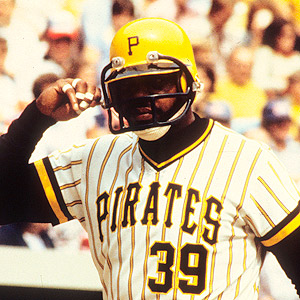
115. Dave Parker
mlb_parker_300.jpg
Pos: RF/OF/DH
Teams:
Pittsburgh Pirates 1973-1983
Cincinnati Reds 1984-1987
Oakland Athletics 1988-1989
Milwaukee Brewers 1990
California Angels 1991
Toronto Blue Jays 1991
Short Biography:
He came this close to winning the Triple Crown in 1978, and no that's not a photoshoped image.  Parker actually wore that during the 1978 after breaking his jaw.

Still this 7 time all-star and five tool outfielder needs to be included in the Hall.

__________________


Guru

Status: Offline
Posts: 739
Date:

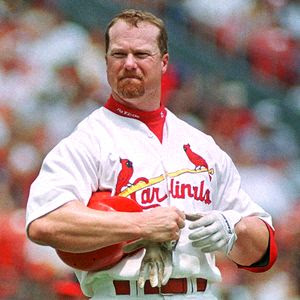
114. Mark McGwire
mcgwire.jpg
Pos: 1B
Teams:
Oakland Athletics 1986-1997
St. Louis Cardinals 1997-2001
Short Biography:
It will be interesting to see how long McGwire will have to wait to be inducted into the Hall, if he's ever inducted.

Personally I feel McGwire should be in, just because with how rapant steroid use was in the late 90's-early 2000's you either have to include everyone from that era who should get in, or just throw out everyone's stats who played in that era.

__________________


Guru

Status: Offline
Posts: 739
Date:

113. Willie Stargell
md_5210045-Willie-Stargell.jpg
Pos: OF/1B
Teams:
Pittsburgh Pirates 1962-1982
Short Biography:
The leader of the We Are Family Pirates, the hero of the 1979 World Series, and one of the most colorful individuals to ever play the game, Stargell's place in history is forever secured.

__________________


Guru

Status: Offline
Posts: 739
Date:

112. Steve Finley
steve-finley.jpg
Pos: CF/OF
Teams:
Baltimore Orioles 1989-1990
Houston Astros 1991-1994
San Diego Padres 1995-1998
Arizona Diamondbacks 1999-2004
Los Angeles Dodgers 2004
LA Angels 2005
San Francisco Giants 2006
Colorado Rockies 2007
Short Biography:
He doesen't have monster offensive numbers, but he does have 5 gold gloves, and was a true all-around player for the better part of 19 big league seasons.

__________________


Guru

Status: Offline
Posts: 739
Date:

111. Enos Slaughter
SLAUPHU008000~Enos-Slaughter-s-Mad-Dash-1946-Posters.jpg
Pos:
RF/OF
Teams:
St. Louis Cardinals 1938-1942, 1946-1953
New York Yankees 1954-1955, 1956-1959
Kansas City Athletics 1955-1956
Milwaukee Braves 1959
Short Biography:
One of the fiercest competitors during the World War II era, the man responsible for one of the most famous plays in history has also taking a bit of a beating PR wise, as allegations of racism have put a damper on his image.

__________________


Guru

Status: Offline
Posts: 739
Date:

110. Joe Torre
torre-joe-atb-3.jpg
Pos: C/3B/1B
Teams:
Milwaukee/Atlanta Braves 1960-1968
St. Louis Cardinals 1969-1974
New York Mets 1975-1977
Short Biography:
Although better remembered as a manager, most forget that Torre was arguably the best catcher in baseball during the 1960's.

A nine time all-star in his career, Torre was also the 1971 NL MVP, and his exclusion from the Hall is still somewhat of a mystery to me.


__________________


Guru

Status: Offline
Posts: 739
Date:

109. Heinie Manush
Heinie-manush.jpg
Pos: LF/OF
Teams:
Detroit Tigers 1923-1927
St. Louis Browns 1928-1930
Washington Senators 1930-1935
Boston Red Sox 1936
Brooklyn Dodgers 1937-1938
Pittsburgh Pirates 1938-1939
Short Biography:
He's best remembered as a Tiger, who have since honored him alongside their retired numbers, but Heinie Manush's best years actually came with the Washington Senators, where he led the AL in hits during the 1933 season.

__________________


Guru

Status: Offline
Posts: 739
Date:

108. Jim Edmonds
phf-aagm121.jpg
Pos: CF/OF
Teams:
California/Anaheim Angels 1993-1999
St. Louis Cardinals 2000-2007
San Diego Padres 2008
Chicago Cubs 2008
Short Biography:
He's the greatest defensive outfielder I've ever seen in my lifetime.

I don't think many people realize just how great of a player Jim Edmonds was at his peak, but I'm hoping Cooperstown does, because that's exactly where he belongs.

__________________


Guru

Status: Offline
Posts: 739
Date:

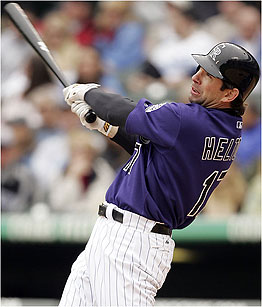
107. Todd Helton
todd_helton.jpg
Pos: 1B
Teams:
Colorado Rockies 1997-Present
Short Biography:
Todd Helton is one of those guys, who because of Coors Field renders him virtually unrankable in my eyes.

He's a career .328 hitter, with over 2000 hits, and a career .427 OBP

Yet how much of that is due to Coors Field?

I can tell you that his three gold gloves had nothing to do with Coors Field though.

__________________


Guru

Status: Offline
Posts: 739
Date:

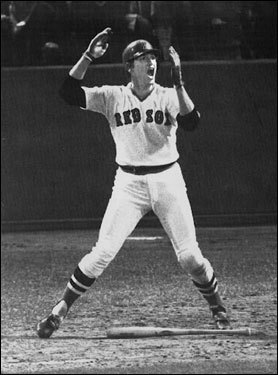
106. Carlton Fisk
1192820900_2487.jpg
Pos: C
Teams:
Boston Red Sox 1969, 1971-1980
Chicago White Sox 1981-1993
Short Biography:
No other catcher played at a higher level longer then Carlton Fisk did.

The man is also responsible for perhaps the most famous home run in World Series history.

__________________


Guru

Status: Offline
Posts: 1152
Date:

Great additions Pmore.....Brett Butler is one of the most unerrated players of all time and Dave Parker is awesome.

__________________

Some cause happiness wherever they go; others, whenever they go.


Guru

Status: Offline
Posts: 739
Date:

105. Bob Johnson
bob-johnson.jpg
Pos: LF/OF
Teams:
Philadelphia Athletics 1933-1942
Washington Senators 1943
Boston Red Sox 1944-1945
Short Biography:
"Indian Bob" is a classic example of somebody who is excluded for the Hall simply because they had the misfortune of spending the majority of their career on bad teams.

It's really hard to justify keeping him out, while inducting Lou Boudreau.  That's all I'm saying.

__________________


Guru

Status: Offline
Posts: 739
Date:

104. Lou Whitaker
large_lTRAMMELL__WHITAKER.jpg
Pos: 2B
Teams:
Detroit Tigers 1977-1995
Short Biography:
The other half of Detroit's longtime middle infield.  Find me another AL second baseman who even approaches Lou Whitaker's skills during the 1980's.

__________________


Guru

Status: Offline
Posts: 739
Date:

103. Harold Baines
Harold_baines2001.jpg
Pos: DH/RF/OF
Teams:
Chicago White Sox 1980-1989, 1996-1997, 2000-2001
Texas Rangers 1989-1990
Oakland Athletics 1990-1992
Baltimore Orioles 1993-1995, 1997-1998, 2000
Cleveland Indians 1999
Short Biography:
How good was Harold Baines?  The White Sox retired his number while he was still and active player.

Seen largely as a one dimensional player for most of his career, Baines was considered a five tool outfielder when he first broke in, and had it not been for a series of knee injuries incurred during the 1986 season, which drained all of his speed, Baines would have easily cracked the top 100.

I don't know what Cooperstown is waiting for with Harold.


-- Edited by pmoehrin on Tuesday 16th of June 2009 03:03:40 PM

__________________


Guru

Status: Offline
Posts: 739
Date:

102. Ron Santo
santo1.jpg
Pos: 3B
Teams:
Chicago Cubs 1960-1973
Chicago White Sox 1974
Short Biography:
Without question the best 3rd baseman in the National League and probably in all of baseball during the late 60's and into early 70's, I think Hall of Fame voters have another image in mind of Ron Santo at Shea Stadium then the one pictured above.

The image of a black cat walking past Ron Santo while in the on deck circle is symbolic of the Cubs 1969 collapse, and it's the only thing I can come up with as to why he has been unjustly kept out of the Hall of Fame for so long.

-- Edited by pmoehrin on Tuesday 16th of June 2009 03:13:29 PM

__________________


Guru

Status: Offline
Posts: 739
Date:

101. Tony Perez
tony-perez-1.jpg
Pos: 1B/3B
Teams:
Cincinnati Reds 1964-1976, 1984-1986
Montreal Expos 1977-1979
Boston Red Sox 1980-1982
Philadelphia Phillies 1983
Short Biography:
I've already mentioned everything you should know about Tony Perez, and am simply reiterating the fact that he is no longer in the top 100 with the inclusion of Billy Hamilton.

__________________


Guru

Status: Offline
Posts: 762
Date:

Ugh.. don't even get me started on Ron Santo and the retards at the Hall of Fame.

__________________

The Cubbies got me, got me questioning, where are the runs??


Guru

Status: Offline
Posts: 739
Date:

75. Barry Larkin
2a520510.jpg
Pos: SS
Teams:
Cincinnati Reds 1986-2004

Biography:

The best National League shortstop during the 1990's, Barry Larkin makes the list at number 75.

Born April 28, 1964 in the same city where he would play his entire big league career in, Larkin would elect to attend the University of Michigan, turning down a full football scholarship to the University of Notre Dame to do so.

While at college he was named to the 1984 US Olympic team, and a roster that also included future big leaguers Will Clark, Shane Mack, and B.J. Surhoff.

The following year the Reds made him the 4th overall pick in the 1985 draft, as the Reds hoped Larkin would be the answer to replace the once great but now aging Dave Concepcion.

Larkin would burst onto the scene during the 1986 season as a mid August call up, and even though he only played for a month and a half was still good enough to finish seventh in the Rookie of the Year voting.

The following year Larkin would have somewhat of a sophmore slump, hitting only .244 on the year, in what would prove to be the lowest batting average Larkin would ever put up in a season, but rebounded the following year htting nearly .300 while appearing in his first all-star game of what would be an incredible 12 all-star games, and winning his first of what would be 9 silver slugger awards.

Coming off the turmoil that was the 1989 season, many would not have been surprised had the young but talented Reds simply rolled over for the 1990 season, but first year Reds manager Lou Pinella was not going to simply let the team use the distractions from the year before as an excuse to quit on a season.

With Jose Rijo, and the Nasty Boys (Norm Charlton, Randy Myers, and Rob Dibble) doing the pitching, Larkin led the Reds at the plate, and on the field, hitting .301, while stealing 30 bases, and finishing 7th in MVP voting, as the Reds captured the NL West title, and soon the NL pennant, and prepared for what seemed to be a huge mismatch, as they would face the reigning champion Oakland A's in the World Series.

Facing a team that won 103 games during the regular season with a roster that included Mark McGwire, Jose Canseco, and Dennis Eckersley among others, once again nobody would have held it against the Reds if they had simply rolled over.

The Reds didn't simply just roll over, or even go as far as to make a Series out of.  Instead they dominated the A's.

Larkin would lead the Reds offense hitting .350 for the Series, as the Reds outscored the A's 22-8 for the Series, in a stunning 4 game sweep, in what has gone down as one of the biggest upsets in World Series history.

Unfortunately for the Reds the victory would turn out to be a very bittersweet one.

Outfielder Eric Davis would tear up his knee in the deciding game four while diving for a ball, and was never the same player after.

Other cornerstones of the team such as Mariano Duncan, and Danny Jackson sought to translate their postseason success into big bucks.

The Reds would be one of the first teams to fall victim to their small market woes, forcing them to lose out on players like Duncan, and Jackson, while injuries to other star players like Jose Rijo, and Tom Browning, as well as numerous bad deals such as sending Paul O'Neil to the Yankees for Roberto Kelly ended any thoughts of a second Big Red machine.

Still with Larkin as the centerpiece of the attack, the Reds would still remain competitive throughout the 1990's, and in 1995 the Reds would return to the postseason for the first time since their World Series victory.

Along the way Larkin would hit .319 with 15 home runs, capturing his second of what would be three consecutive gold gloves, and winning his first and only MVP award.

After disposing of the Dodgers in the NLDS, the Reds would face and later be steamrolled by the Braves in the NLCS in a series that would be seen by virtually no one as the MLB came up with the brilliant idea of showing both the ALCS, and NLCS at the exact same time while only allowing one of the games to be shown in a particular region, or the ill faded Baseball Network.

Unable to keep any stars outside of Larkin for any prolonged period of time, the Reds would begin a very steadily decline that continues to this day, while Larkin continued to put up spectacular numbers, and often times was the lone star on some very bad Reds teams.

Since retiring from the game in 2004, Larkin was inducted into the Reds Hall of Fame in 2008, and was just recently named to the upcoming class of the College Baseball Hall of Fame.

Since retiring the Reds have not issued the #11 jersey, and with next year being his first year for eligibility in the Hall of Fame, it's widely expected the Reds will retire Larkin's jersey especially considering that many expect Larkin to get in easily on the first ballot.

Larkin can still be seen on TV today, as he currently works as a studio analyst for the MLB Network.

__________________


Guru

Status: Offline
Posts: 739
Date:

74. Joe Kelley
joe-kelley.jpg
Pos: OF
Teams:
Boston Beaneaters/Doves 1891, 1908
Pittsburgh Pirates 1892
Baltimore Orioles 1892-1898
Brooklyn Superbas 1899-1901
Baltimore Orioles 1902
Cincinnati Reds 1902-1906

Biography:

One of the leaders of the great Oriole teams of the 1890's, Joe Kelley makes the list at number 74.

Born December 9, 1871 in Cambridge, Massachusetts, Kelley would sign on with his hometown Beaneaters, before being released by the team the same year, and signed on with the Pittsburgh Pirates for the 1892 season.

During the 1892 season the Pirates would elect to trade Kelley for another prospect named George Van Haltren.

Van Haltren himself was a fine turn of the century player, and in my opinion should be inducted into the Hall of Fame, although the Pirates would never get the full benefit of Van Haltren as he would be purchased by the New York Giants after the 1893 season.

The Orioles had come over from the Amercian Association or the Beer and Whiskey League, and after having their roster deplated as a form of expansion fee leaving them as one of the worst teams in baseball.

What arbubly turned the teams fortunes was a trade with Brooklyn after the 1893 season.

The Orioles would send Billy Shindle, and George Treadway both of whom would go on to have very undisginushed careers in exchanging for aging great Dan Brouthers, and future Hall of Famer Willie Keeler, who was just getting started.

In 1893 the Orioles finished in eigth place, but would come back in 1894 to shock the baseball world.

While Keeler would begin his spectacular career, the 36 year old Brouthers would have one last great season in him, hitting .347 while leading the team with 9 home runs, and 128 RBI's.

Argubly though the best player on the 1894 Oriole team was Kelley.

That year Kelley would hit .393, but would also walk 107 times on the year, giving him an astounding .502 OBP, and an OPS of over 1.  A feat he would accomplish for the next three consecutive years.

Along the way the Orioles would capture the NL pennant three consecutive times from 1894-1896, and finish second place each of the two years after, before forces outside the the team's control crippled the franchise after the 1898 season, and eventually lead to the team folding after the 1899 season.

Kelley was just one of the stars on the great Oriole teams, but his named can still be found in the record books today, as he is ninth on the all time list for career triples.

Upon retiring from the game in 1906, Kelley would move north and manage the International League's Toronto Maple Leafs (not the hockey team) to two IL pennants.

In 1971, Joe Kelley was selected by the Veterans Commitee to be inducted into the Hall of Fame.

__________________


Guru

Status: Offline
Posts: 739
Date:

73. George Sisler
200px-George-sisler-browns.jpg
Pos: 1B
Teams:
St. Louis Browns 1915-1927
Washington Senators 1928
Boston Braves 1928-1930

Biography:

The only man on the list to spend the majority of his career playing for the St. Louis Browns, George Sisler comes in at number 73.

March 24, 1893 in Manchester, Ohio, Sisler would enroll at the University of Michigan who's manager at the time was Branch Rickey.  The Browns would sign Sisler out of college, not as a hitter, but a pitcher.

He was a good pitcher, posting a 4-4 record his rookie year with an ERA of 2.83, but his .285 batting average was simply too good to be kept out of the lineup everyday.  Winning out the starting first base job during the 1915 season.

The following year, the Browns would elect to pull Sisler out of the rotation, and make their permanent starting first baseman.

Sisler would prove to be a solid hitter over the next 4 years, steadily improving until his 1920 season.

That year Sisler would explode from very good player, to superstar player, leading the American League with a .407 batting average, and having career highs in both home runs and RBI's, as he hit 19 home runs, and drove in 122 runs, in quite possibly his finest year ever.

Two years later Sisler would have another monstrous year, hitting a ridiculous .420, the third highest batting average in history after 1900, while also leading the American League in stolen bases for the second consecutive year.  A feat he would accomplish four times in his career.

He's also the only first baseman post deadball era to lead a league in stolen bases.

That year Sisler would also be named the AL MVP, and would set an American League record for consecutive hits, with a 41 game hitting streak.

Unfortunately, this would mark the high water mark in Sisler's career.

That offseason, Sisler would suffer a severe sinus infection, that nearly killed him, and forced him to miss the entire 1923 season.

Although he would return in 1924, now as player manager, and once again continued to be a productive player, he never again came close to putting up the types of numbers he had been putting up before 1923.

After retiring in 1930, Sisler was inducted into the Hall of Fame in 1939, and would stay in the game as a special assistant to Branch Rickey for the remainder of his life, dying in 1973 while still serving the Pittsburgh Pirates as a scout.

George Sisler also had two sons, Dick, and Dave who also went on to play in the Majors.

While Dave never emerged as any more then a spot starter, Dick on the other hand had a very good career, and hit one of the most famous home runs in Philadelphia Phillies history, as on the final day of the 1950 regular season, Dick Sisler hit a game winning home run to propel the Philadelphia Phillies to their first NL pennant in 35 years.

A statue can be seen outside of Busch Stadium honoring Sisler.

In my opinion Sisler is one of the most tragic players in history.  His pace up until the 1922 season is as good as any player who has ever played the game, and had in not be for the sinus infection, I think Sisler's named wouldn't be reveled until we got into the top 10.

__________________


Guru

Status: Offline
Posts: 739
Date:

72. Jeff Kent
kent_jeff.jpg
Pos: 2B
Teams:
Toronto Blue Jays 1992
New York Mets 1992-1996
Cleveland Indians 1996
San Francisco Giants 1997-2002
Houston Astros 2003-2004
Los Angeles Dodgers 2005-2008

Biography:

Often controversial, the man who inspired this list comes in at number 72.

Born March 7, 1968 in Bellflower, California, Jeff Kent was drafted out of the University of California by the Toronto Blue Jays in the 20th round of the 1989 Draft.

Kent would make a loaded Blue Jays out of spring training for the 1992 season, but because of the presence of Roberto Alomar at second, and the value he could command on the trade market, it was not expected Kent would be in Toronto for very long.

On August 27th, 1992 the Blue Jays would trade Kent along with Ryan Thompson to the New York Mets, for rent a player David Cone, who would help lead Toronto to the 1992 World Series title.

In stark contrast to Toronto, the Mets were very much in a rebuilding mode, and hoped that the addition of Kent would give them a cornerstone to build a franchise around.

While Kent would play well for the Mets, his tenure in New York was marked by controversy, as he earned the reputation as one of the worst clubhouse presence's in baseball, as was constantly booed by the New York crowd, who viewed him largely as a selfish ballplayer.

In 1996 Kent was traded along with Jose Vizcaino to Cleveland for Carlos Baerga and Alvaro Espinoza.

The Indians clearly had very little interest in keeping Kent, and that offseason shipped him along with Julian Tavarez, and once again Jose Vizcaino for all-star third baseman Matt Williams.

With the Giants Kent seemed undergo somewhat of a renaissance, as although he only hit .250 for the 1997 season, he also hit 29 home runs, and drove in 121 runs, good enough for an eighth place finish in the MVP voting helping to lead the Giants to their first postseason appearance since 1989.

The following year Kent would continue his power pace, while also upping his batting average all the way up to .297

In 2000, Kent would have his finest season ever, and one of the greatest offensive years ever by a second baseman, hitting a career high .334 with 33 home runs while driving in 125 runs, while also setting a career high in walks with 90, giving him an OBP of .424, and an OPS of 1.021 helping to lead the Giants to their second NL West title in four years.

That year Kent would also be named the NL MVP, becoming the first second baseman since Ryne Sanberg in 1984 to be named MVP.

Despite Kent's greatness on the field, off the field matters would prevent him from ever being accepted by the Giants, as constant verbal sparrings most notably with Barry Bonds, helped perpetuate his reputation as a poor clubhosue presence, while an offseason biking accident before the 2002 season, an activity which his contract clearely prohibited further soured his relationship with the team.

Kent would have another big year in 2002, hitting .313 with a career high 37 home runs, while also driving in 108 runs, in route to the Giants first World Series apperance since 1989.

While the Giants would lose the Series to Anaheim in seven games, Kent himself had a solid series, batting .276 while also hitting 3 home runs, and driving in seven runs.

Despite his temenouds on field performance, the Giants clearly had enough of Kent, and let him walk in the free agency, where Kent would sign with the Houston Astors.

In order to add Kent to the lineup current starting second baseman Craig Biggio agreed to move to center field.

In 2004 Jeff Kent would hit his 288th home run as a second baseman, putting him ahead of Ryne Sandberg for first on the all-time list for most home runs by a second baseman.

That postseason Kent would have perhaps his biggest moment as a player, hitting a walk off home run in game 5 of the NLCS, giving the Astros a 3-2 series lead which they would go on to lose to the St. Louis Cardinals.

That offseason Kent would sign on with the one time rival Los Angeles Dodgers.

In 2005 Kent would once again put up solid numbers, but would once again come under fire, as Dodger outfielder Milton Bradley accused Kent of being racist.

An oblique injury would cost him nearly a third of the 2006 season, but would still manage to put up solid numbers for the remainding three years of his career before retiring just before the 2009 season.

Kent has also been one of the most vocal supporters of stronger drug testing, and was one of the few active players to come out with this stance.

The inspiration from this list came from the argument of whether or not Jeff Kent is a Hall of Famer.

Kent hit .290 in his career with 377 home runs, and had 2,461 hits.  Also while he had the reputation of being a poor defensive second baseman, in my view he was never a real defensive liability until the last two years of his career in Los Angeles.

At the very least he was an average fielding second baseman, and in my opinion an above average second baseman defensively.

But even going beyond that, if he was that bad of a defensive player, he wouldn't be playing second base for the better part of 17 major league seasons.

Still to the people who consider Jeff Kent anything less then a slam dunk Hall of Famer, I ask what do you want?

If you want to make the argument he isn't a Hall of Famer because of his off field controversies, I won't agree but I'll at least give it some merit.

But there are few middle infielders who ever played the game that can match his offensive numbers, and if those numbers aren't good enough for the Hall, well then half the guys in the Hall of Fame need to be removed.

__________________


Guru

Status: Offline
Posts: 739
Date:

71. Sammy Sosa
sammy-sosa-action.jpg
Pos: RF/OF
Teams:
Texas Rangers 1989
Chicago White Sox 1989-1991
Chicago Cubs 1992-2004
Baltimore Orioles 2005
Texas Rangers 2007

Biography:

The man who has become one of the symbolic figures of the "steroid era" Sammy Sosa makes the list at number 71.

Born November 18, 1968 in the baseball hotbed that is the Dominican Republic, Sosa would sign with the Texas Rangers, and after spending three full seasons in the minors, would make his major league debut in 1989.

In his sixth big league game, Sammy Sosa would hit his first home run, ironically off another icon of the steroid era Roger Clemens.

Although Sosa showed talent, the Rangers thought they were in a position to win now, and elected to trade Sosa, along with another prospect Wilson Alvarez, and Scott Fletcher to the Chicago White Sox in exchange for slugging DH Harold Baines, and middle infielder Fred Manrique.

In his first big league season, Sosa would display some potential, hitting 15 home runs with 32 stolen bases.  However his .233 batting average, and high strike out rate made him a tough swallow in the everyday lineup, and the following year Sosa would regress, managing to only hit .203, and lost his starting job in right field before the season ended.

Many in the organization were also beginning to question Sosa's work ethic, and whether or not he actually cared enough to fulfill the potential he had.

Just before the 1992 season, the White Sox would make their decision, electing to cut loose Sosa, and traded him along with Ken Patterson to the Chicago Cubs in exchange for aging slugger George Bell, in what has since gone down as one of the most lopsided trades in history.

Sosa would have an injury plagued '92 season for the Cubs, but showed promise hitting a respectable .260 with 8 home runs, and 15 steals in just 67 games.

The following year Sosa would finally begin to emerge as a star, leading the team with 33 home runs, while stealing 36 bases, and driving in 93 runs.

The next year would be even a better year for Sosa, as hit .300 for the first time in his career, while leading the Cubs in all major offensive categories with 25 home runs, 70 RBI's, and 22 stolen bases in the strike shortened '94 season.

From '95-'97 Sosa earned the reputation as a classic strong armed, poor fielding, slugging outfielder, who happened to have some speed.

In the middle of June of '98, Sosa would begin a tear that would not stop for 5 years.

That month Sosa would hit an incredible 20 home runs which included 4 multi home run games, and one game where he hit three home runs.

That year Sosa emerged from all-star outfielder into all-world outfielder as he along with Mark McGwire began a magical summer, that even at the time seemed almost too good to be true.

Although Sosa would lose out on the home run chase, he would still end up with an incredible 66 home runs on the year, and would win the NL MVP award, and was named co sportsman of the year by Sports Illustrated magazine along with McGwire.

Along the way Sosa would propel the Cubs to their first postseason appearance since 1989, by winning a one game playoff against the San Francisco Giants to claim the NL Wild Card.

Sosa would pick up right where he left off for the 1999 season hitting 63 home runs with a .288 batting average which amazingly only put him 9th in MVP voting.

In 2000 Sosa would lead the NL in home runs with what would be a four year low of 50 home runs.

2001 would be arguably Sosa's best year, as he hit a career high .328, while once again toping the 60 home run mark with 64, and leading the NL with 164 RBI's.  Sosa would also put up career bests in OBP, and slugging percentage, and would lead the NL with 146 runs scored.

That type of season would have won him the MVP award in virtually any other year except 2001, as Barry Bonds destroyed the record previously set by Mark McGwire by hitting 73 home runs, making Sosa the first and probably only player in big league history to have three years with over 60 home runs, and have none of them good enough to lead the league.

In 2003, Sosa would have his final great year as a player hitting .279 with 40 home runs, and leading the Cubs offensive charge into the postseason.

Although Sosa wouldn't do much against Atlanta, he would have a very good series against Florida hitting .308 with two home runs, including a 9th inning game tying home run in game one.

The year however would also be marked by controversy for Sosa as on a June 3rd game against Tampa Bay Sosa would break his bat revealing it to be corked, and was immediately rejected from the game.

The bat would begin to raise controversy that continues to this day about how often Sosa used a cork bat during a game, although out of the 70+ bats that Sosa used during his career that have been tested, none of them were revealed to have any cork in them, and I actually do believe the story he gave of accidentally using a batting practice bat in the game.

The following year would begin a noticeable decline for Sosa as while his power numbers remained high, his overall numbers dropped considerably, as he posted his lowest totals in nearly every major offensive category since 1997, and was by now beginning to be considered a major defensive liability by some.

By now many of the rumors of rapant steroid use in baseball during the late 90's and early 2000's were beginning to come out, and Sosa's named was chief among them.

He was called to testify before congress, and was one of the many players, and appeared to use the playing stupid approach as he seemed to have a very hard time understanding the english language, and only answered a question himself when asked in spanish by one of the congress members conducting the hearing.

That offseason the Cubs elected to trade Sosa to the Baltimore Orioles linking him with Rafael Palmeiro where they became the first members of the 500 home run club to ever be teamates, while they each had over 500 home runs.

The season would be a huge down year for Sosa, as he had his lowest numbers in virtually major offensive category since his White Sox days, and was subsiquently released by the Orioles.

Sosa would decline two minor league offers by the Washington Nationals, and would take the 2006 season off.

In 2007 Sosa's career would come full circle, as he rejoined the team he first signed with the Texas Rangers, and would have one last great moment in his career, hitting his 600th career home run, before officially retiring a few weeks ago after being out of the game for over a year.

Yesterday the New York Times released a story saying that Sosa was one of the players who had failed a 2003 drug test conducted by Major League Baseball.

It's a shame that guys like Sosa will ultimately probably never be rememberd for what they did on the field, and perhaps justly so.  If it's that rapant though, guys like Sosa ultimately hurt themselves in the grand scheme of things.

From a pure numbers side of things Sosa should easily be in the top 20.  But the second you start putting his numbers in perspective of the era he played in, he and virtually every other player in his era who had stats like that drop like a rock.

I mean here you have a career .273 hitter with over 600 home runs, and he is 71 on this list.

That type of rational would be unheard of 15 years ago, but it's equally unherad of for a player to have three 60 home run seasons that weren't good enough to lead the league.

That says it all about how goofy the offensive numbers were that were being put up in that era.

It's also one of the reasons why I really don't feel the need to throw out the era.  I think so many guys were on the juice it ultimately cancelled itself out in many ways looking in the grand scheme of things.

As for the New York Times leak, it's nothing more then some guy sitting in the MLB front office who is trying to make a quick buck.

If he really wanted to be a benevolant figure he would release all the names, but there isn't much money in that, so he or she releases the names one by one so reporters can get stories, and write books.

My only hope is that they find this person who's leaking this type of info, their fired on the spot, and A-Rod, Sosa, and anyone else who this person leaked sues the ever loving **** out of them, (excuse the language) because clearly they are doing this out of their own self interest, and have no regard for the people they are hurting, or things like CBA's for that matter.

The only thing that disgusts me more then the whole steroid era, is the amount of people that have stepped out of the woodwork trying to make a quick buck off this, at the expense of people's feelings, written contracts, the US legal system, and ultimately the planet earth I feel.

Do I think Sosa should be in the Hall of Fame, yes regardless of what people think or feel.

Do I think he will get in?  I think he will, but it will probably be a long time.  The second a player is voted in who admidts he used steroids while playing, it will open up the flood gates, and it will happen in my opinion.

Clearly there is just way too much money to be made by keeping something like that secret after your retired.

__________________


Guru

Status: Offline
Posts: 2200
Date:

Sammy will never get in the Hall of Fame for our little discovery yesterday. Sammy is on the juice back in 2003. So out of 104 players they have 2 people that now are leaked from that report Sammy Sosa and Alex Rodriguez.

__________________

I think that Jimmy Hendrix was the best guitarist in the world

«First  <  1 2 3 4  >  Last»  | Page of 4  sorted by
 
Quick Reply

Please log in to post quick replies.


Create your own FREE Forum
Report Abuse
Powered by ActiveBoard